The artificial intelligence market isn't just growing; it's exploding. In September 2026, the global AI market reached an estimated USD 900 billion, with projections soaring to USD 4.216 trillion by 2035. This isn't a future trend; it's the current reality for entrepreneurs and businesses looking to innovate. If you're wondering how to start business with AI, the message is clear: the time is now, and the focus is on practical, workflow-driven solutions that deliver measurable value.
Gone are the days of AI being a futuristic concept or a niche technology. Today, it's an operational backbone, reshaping how small teams achieve massive operating power and how enterprises drive efficiency. Let's look at the latest developments and what they mean for starting your AI-powered venture.
The AI Economy: Agentic Systems and Hyperautomation Lead the Charge
A surprising statistic reveals the rapid shift in AI adoption: 79% of enterprises have already adopted AI agents in some form by September 2026. While only 11% run them in full production, Gartner predicts that 40% of enterprise applications will embed AI agents by the end of 2026, a significant jump from less than 5% in 2025. This isn't just about individual AI tools; it's about orchestrated work systems.
Agentic AI systems, which can act autonomously within defined parameters, are becoming core units of value. They are moving AI from isolated tasks to connected workflows, helping teams research, predict, draft, route, review, and act across business functions. This hyperautomation is a game-changer, especially for smaller teams aiming to maximize their output and operational power.
The success stories are compelling. Companies deploying AI agents report an average 3.5x ROI within 12 to 18 months. Programmers using generative AI, for instance, are 88% more productive, particularly on repetitive tasks. These numbers show that AI isn't just about cutting-edge tech; it's about real-world business outcomes.
From Experiment to ROI: Generative AI's Business Impact
Generative AI has matured beyond simply creating content. It's now running businesses, with enterprise spending tripling from $11.5 billion in 2024 to $37 billion in 2025. The average ROI reported is an impressive 3.7x. Companies are no longer experimenting; they are integrating GenAI into existing workflows to achieve measurable business results.
This maturation also brings a demand for specialized AI. Industry-specific AI solutions, whether for healthcare diagnostics, financial fraud detection, or smart manufacturing, are delivering higher accuracy and better ROI than generic tools. This trend suggests a ripe opportunity for entrepreneurs to develop niche AI products addressing specific industry pain points.
For example, the partnership between Fujitsu and Palantir Technologies shows this in action. One customer achieved over $10 million in cost savings within one year, doubled operational productivity, and significantly accelerated disruption response. This was done by integrating Palantir's platform with Fujitsu's expertise, proving the power of tailored AI solutions.
The Infrastructure Powering Progress: Massive Investments
The underlying infrastructure supporting this AI revolution is seeing monumental investment. Google, for instance, committed €13 billion over two years to AI infrastructure in Finland, focusing on data centers and clean energy. This highlights the foundational requirements for scalable AI operations.
Perhaps even more telling is SpaceX's recent move. They secured a $13.3 billion per year AI compute deal starting December 2026, their fourth major AI infrastructure contract in less than a year. This massive demand for AI processing power indicates the scale at which businesses are adopting and relying on AI for their core operations.
This infrastructure boom also impacts pricing. The effective price per million tokens has declined by 41% to $0.68 as of September 2026, down from a March 2026 peak of $1.15. This makes AI more accessible and cost-effective for businesses of all sizes, lowering the barrier to entry for new AI ventures.
How to Start a Business with AI: Workflow First, Features Second
The shift in mindset is critical. As European founder Violetta Bonenkamp wisely puts it, "Do not chase AI features. Build AI workflows." This is the core advice for anyone looking to start business with AI today. It is not about adopting every new AI tool, but about strategically integrating AI into your operational fabric to solve real problems and create value.
This means focusing on enterprise execution architecture. AI is moving from standalone adoption into the very operating system of businesses. It requires modularity, dynamic capital allocation, and thoughtful workforce planning. Companies are prioritizing workflows where AI can deliver significant, measurable payoffs, moving beyond mere experimentation.
A new workforce is emerging: the AI generalist. These individuals can bridge the gap between complex AI capabilities and practical business needs, becoming incredibly valuable. For entrepreneurs, this means building teams or developing skills that understand how to integrate AI holistically, not just use it as a standalone feature. The rise of low-code/no-code platforms, expected to build 70% of enterprise applications by 2026, further democratizes AI, making sophisticated tools accessible to mid-sized businesses and even individual entrepreneurs.
If you are planning to start a business with AI, consider platforms that simplify this workflow integration. A self-hosted AI OS like TashiOS combines an AI cloud desktop with all the tools you need to create, sell, and manage websites, apps, and automations as a recurring-income business. It helps you focus on building workflows rather than stitching together disparate tools.
TashiOS: Your Self-Hosted AI Command Center for Business
For freelancers, entrepreneurs, agencies, and side-hustlers, the complexity of launching digital services can be overwhelming. You usually need to juggle AI chat, code editors, hosting, website builders, automation tools, email platforms, and client management. This is where TashiOS comes in. It solves this problem by combining all these essentials into one cloud workspace.
TashiOS provides an AI-powered cloud desktop that runs on your own private VPS. This means full data control and no vendor lock-in. Its built-in AI assistant, Skynet, is a key differentiator. You simply describe an app or website in plain English, and Skynet builds it for you, no coding required. This radically simplifies the process of creating client-ready digital products.
The platform comes with over 25 built-in apps and tools for building, automating, and running an online business. Instead of per-API-call billing like many cloud AI APIs, TashiOS offers a predictable flat monthly cost of $49. This includes the private VPS, the cloud desktop, all the apps, and $150 in AI credits ($100 starter budget plus a $50 bonus). You own everything you build, from apps and code to customer data, all stored securely on your own server. This ownership and predictable cost model makes TashiOS a powerful ally for any AI-driven business.
Navigating the AI Startup Landscape and Future Growth
The AI startup sector is a magnet for investment. In Q1 2026, investors poured $300 billion into 6,000 startups globally, with an astonishing 80% of total global venture funding going into the AI startup sector. This shows immense confidence in AI's future.
However, the market is split. While mega-rounds go to frontier AI companies, seed to Series B rounds are tougher for vague AI ideas. This emphasizes the need for clear, practical business models when seeking funding. Entrepreneurs need to articulate how their AI solution delivers tangible ROI and fits into established or emerging workflows.
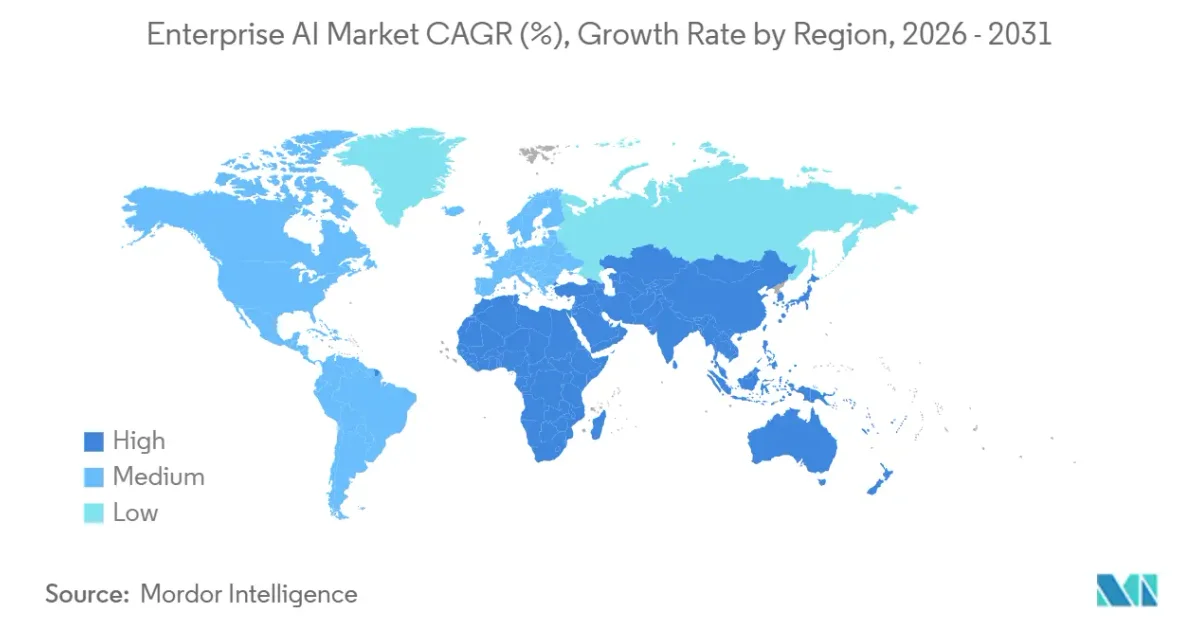
Geographically, North America held the largest market share at 36.92% in 2025, but the Asia Pacific region is expected to grow at a CAGR of 19.8% from 2026 to 2035. This suggests global opportunities for AI businesses. Machine learning dominated the market with a 36.70% share in 2025, with generative AI expected to grow at a CAGR of 22.90% from 2026 to 2035. These trends point to areas of high demand and growth for new ventures.
The adoption rates are also soaring. 88% of organizations used AI in at least one business function in 2025, up from 78% the previous year. In Germany, 89% of executives consider AI highly relevant, and about 73% of U.S. companies use AI. This widespread adoption creates a massive market for AI-powered products and services.
Building Your AI-Powered Future: Practical Steps
Starting a business with AI in September 2026 means focusing on tangible value. Here are some practical implications and predictions to guide your venture:
- Identify Workflow Gaps: Instead of creating a new AI feature, find existing business workflows that are inefficient or costly. How can an AI agent automate or enhance a series of steps? Think about hyperautomation.
- Prioritize ROI: Develop solutions that promise clear, measurable returns on investment. Companies are looking for solutions like the Fujitsu/Palantir example, which delivered over $10 million in savings.
- Consider Niche Solutions: Generic AI tools are becoming commoditized. Specialized AI for specific industries often yields better accuracy and ROI.
- Embrace Agentic AI: Think of AI agents as digital employees. How can they perform autonomous actions to streamline operations?
- Focus on Data Ownership and Control: As AI becomes central, businesses want control over their data and infrastructure. Solutions that offer self-hosting or private cloud options, like TashiOS, are increasingly attractive.
- Become an AI Generalist: Develop skills to understand both the technical capabilities of AI and the business problems it can solve. This bridge-building role is crucial for successful AI integration.
- Implement Responsible AI (RAI): Moving beyond discussion, operationalizing RAI principles boosts ROI, efficiency, and customer experience. Build trust into your AI products from day one.
The democratization of AI, driven by falling token prices and low-code/no-code platforms, means that sophisticated AI is no longer just for tech giants. Small teams and individual entrepreneurs can now build powerful AI solutions. TashiOS makes this even easier by providing a complete environment where AI builds and you earn, without the usual complexity and high costs.
The current AI landscape is dynamic and full of opportunity. By understanding the shift towards agentic AI, workflow orchestration, and measurable business value, you can position your new venture for significant success. Ready to build your AI business with the latest tools and insights? Start your 7-day free trial today. You won't be charged anything, and you can cancel anytime before day 8. Visit TashiOS pricing to learn more and begin your AI journey.