The world of Artificial Intelligence is moving at warp speed. Just three years ago, generative AI was still finding its footing; now, it boasts a staggering 53% global adoption rate, reshaping industries from the ground up. If you're wondering how to start business with AI in October 2026, you're looking at an unprecedented era of opportunity. This article provides a comprehensive overview of the recent developments, tools, and strategies you need to know to succeed in this dynamic market.
The New AI Frontier: Agentic Models and Cheaper Power
October 2026 marks a significant evolution in AI. We're seeing a fundamental shift from AI as a supplementary tool to a core operational infrastructure. The biggest change is the rise of 'agentic AI,' autonomous agents that can perform multi-step tasks with minimal supervision. Gartner predicts that by the end of 2026, 40% of enterprise applications will use task-specific AI agents, a huge jump from less than 5% in 2025. These agents can plan, act, check their work, and even hand off complex decisions to humans, making them incredibly powerful for business.
Accessibility to advanced AI models has also improved dramatically. OpenAI launched GPT-6 Sol and GPT-6 Luna to all ChatGPT users on October 7, 2026, replacing GPT-5.6. Anthropic followed suit with Claude Haiku 5.5 and Claude Opus 5.5, with Haiku 5.5 notably cutting small-model costs by about 75%. Google also joined in, releasing Gemini 4 Argon for cyber defense and a unified Gemini AI agent for Google Workspace on October 9, 2026, integrating AI across Gmail, Calendar, Drive, and Docs.
AI is now embedded directly into existing software and workflows. Instead of standalone tools, AI capabilities are appearing within platforms like Google Workspace and Microsoft Teams. This streamlines operations and decision-making for businesses. We're also seeing new 'decision models' emerge, like Cloudflare Clef, which return specific answers such as yes/no or a score, rather than free text, making AI even more practical for precise business needs.
Building Your AI Business: Focus on Outcomes, Not Just Tech
Generative AI is transforming how businesses operate. It automates tasks, boosts creativity, and speeds up innovation across marketing, product development, and customer interactions. Experts agree that AI should be seen as a 'delivery engine' for outcomes, not the product itself. Customers want results for their business or life, not just fancy models or APIs. This mindset helps entrepreneurs focus on solving real problems with AI, rather than just building AI for AI's sake.
Real-world examples show AI's impact. In content creation and marketing, AI helps businesses craft targeted campaigns and personalize customer messages. Companies like Jasper AI and Copy.ai offer platforms for marketing AI workflows and content generation. For software development, AI is generating and testing code. Anthropic's Claude Code, released in May 2025, hit a $1 billion revenue run rate in just six months, with 70% to 90% of Anthropic's new code being written by it.
Customer experience is also seeing huge gains, with AI personalizing support and recommendations. Intercom AI and Zendesk AI enhance customer service through ticket automation. AI is even strengthening cybersecurity, with new models like Google's Gemini 4 Argon built specifically for defense. Voice AI, with advancements from ElevenLabs and Suno Speech, is making AI voices sound more human and blending narration with music for creators. These examples show that the key to success is applying AI to concrete business challenges.
The Exploding AI Market: Opportunities and Investment
The AI market is experiencing explosive growth. Global corporate AI investment more than doubled in 2025, reaching $581.7 billion, with private investment growing 127.5% to $344.7 billion. Projections show global AI spending reaching $2.6 trillion in 2026. The overall global artificial intelligence market was valued at USD 390.9 billion in 2025 and is estimated to grow to USD 539.5 billion in 2026 (appscrip.com).
The AI software market is expanding rapidly, projected to hit $174 billion in 2025 and grow to $467 billion by 2030. Generative AI (GenAI) software is growing even faster, with a 29% Compound Annual Growth Rate (CAGR), rising from $63.7 billion in 2025 to $220 billion by 2030. AI as a Service (AIaaS) is also booming, valued at USD 16.48 billion in 2025 and predicted to increase to USD 22.70 billion in 2026, with a CAGR of 37.78% (intimetec.com).
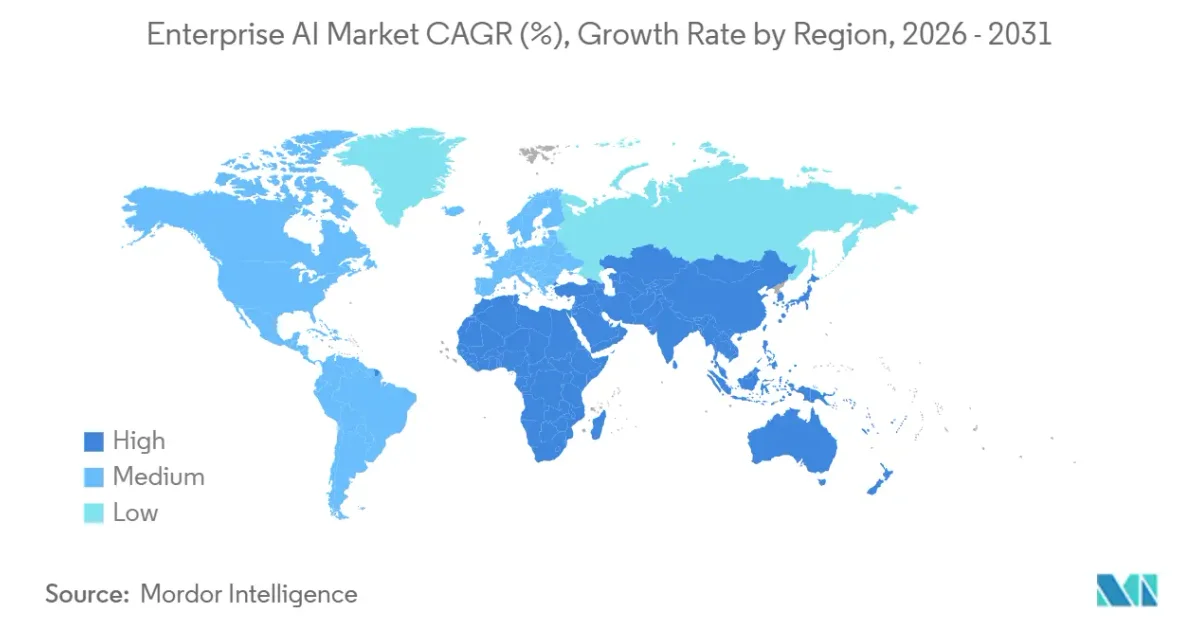
The United States remains the leader in AI investment, attracting about $159 billion in 2025, roughly 79% of global AI startup funding. North America held the largest share of the global AI market in 2025 at 35.5%. Businesses using Generative AI report an average 15.7% cost savings and a 24.69% increase in productivity. Financial services show the highest documented ROI (around 4.2x) from GenAI, driven by fraud detection and automated reporting (ili.digital).
October 2026 AI Releases: What's New and Noteworthy
October 2026 has been a busy month for AI advancements, bringing powerful new tools to entrepreneurs:
- OpenAI: Released GPT-6 Sol and GPT-6 Luna to all ChatGPT users on October 7, 2026. They also introduced the Decisions API, offering lightning-fast structured answers for developers.
- Anthropic: Launched Claude Sonnet 5.5 and Claude Haiku 5.5 in late September/early October 2026, significantly reducing costs for smaller models and making efficient AI more accessible.
- Google: Announced a unified Gemini AI agent for Google Workspace on October 9, 2026, integrating AI across its suite of productivity tools. They also released Gemini 4 Argon, a specialized model for cyber defense.
- Meta: Debuted new AI tools for advertisers, including the ability to generate video from static assets, opening new creative avenues for marketing.
- IrisGo AI Workflow Automation: Launched a free beta, aiming to automate repetitive work and streamline business processes.
Why TashiOS is Your AI Business Co-Pilot in October 2026
Starting an AI business often means juggling countless tools: AI chat, code editors, hosting, website builders, automation tools, and client management platforms. This complexity can be a major hurdle for entrepreneurs. This is where TashiOS steps in, offering an AI cloud desktop designed to simplify this entire process.
TashiOS is specifically built for freelancers, entrepreneurs, agencies, and side-hustlers who want to build client-ready digital products without the usual headaches. It's an AI-powered cloud desktop that runs on your own private VPS, giving you full data control and no vendor lock-in. With TashiOS, you get one flat subscription of $49/month that bundles the VPS, the OS, and monthly AI credits, making your costs predictable.
The standout feature is Skynet, the built-in AI assistant. You simply describe an app or website in plain English, and Skynet builds it for you, no coding required. This means you can create websites, apps, automations, and digital products, then sell them to your own customers for recurring income, all from one integrated workspace. TashiOS helps you create, sell, and manage digital products from one place, solving the problem of stitching together many separate tools. It truly embodies its tagline: "AI builds. You earn."
Practical Steps: Navigating Business Models and Responsible AI
The current AI developments have significantly lowered the barrier to entry for entrepreneurs. Small teams can now achieve the output of much larger teams by using AI agents and automation. However, with intense competition in generic AI tools, the best opportunities lie in developing niche, specialized solutions that address specific problems for targeted audiences.
AI is becoming an operating layer, embedded into platforms, workflows, and decision systems. Businesses need to focus on AI maturity and execution discipline, treating AI as infrastructure with an operating model (mean.ceo). Common AI business models include Agency (using existing AI tools for clients), SaaS (building AI-powered software with subscription revenue), and Service/Consulting (using AI to deliver professional services). Many founders start with an agency or service model and evolve into SaaS as their capabilities grow.
Responsible AI (RAI) is also moving from discussion to practical implementation. Companies are expected to roll out repeatable, rigorous RAI practices in 2026, especially as agentic workflows spread faster than governance models. This includes addressing transparency, bias, data privacy, safety, and accountability (valueinnovationlabs.com). The spread of AI agents will also change the workforce, requiring new skills like 'agent orchestration.' The knowledge workforce may shift to an 'hourglass' or 'diamond' shape, needing more talent at junior and senior levels or more mid-level people to manage agents.
If you're looking to turn these insights into a thriving business, remember that TashiOS helps you bypass the usual complexity. It's an all-in-one platform where AI builds and you earn, providing the tools and infrastructure to create, sell, and manage digital products effortlessly. Ready to explore a simpler way to launch your AI-powered venture? Check out what TashiOS can do for you today.
Essential Tools for Your AI Startup in 2026
Starting an AI business in 2026 means using a range of tools. Here's a comparison of some key platforms:
Foundational AI Models (for building solutions):
- OpenAI (GPT-6 Sol & Luna, Decisions API):
- Pros: Advanced general-purpose AI for text, coding. Intelligent UI turns ChatGPT into an app builder. Decisions API offers fast, structured answers.
- Cons: Can be costly with high usage. Requires significant development effort to integrate and build full solutions.
- Use Cases: Developing custom AI applications, advanced content generation, complex problem-solving, rapid prototyping.
- Anthropic (Claude Haiku 5.5 & Opus 5.5, Claude Code):
- Pros: Excellent for handling complex documents. Haiku 5.5 significantly cuts small-model costs. Claude Code is a powerful coding agent.
- Cons: May not be as broad in scope as GPT models for general tasks.
- Use Cases: Document analysis, legal tech, customer support automation, specialized coding tasks, cost-efficient small-scale AI agents.
- Google (Gemini AI Agent, Gemini 4 Argon, NotebookLM):
- Pros: Unified Gemini AI agent for Workspace is a huge benefit for Google ecosystem users, integrating AI across productivity apps. Gemini 4 Argon for cyber defense. NotebookLM is great for research.
- Cons: Deep integration might mean reliance on Google's ecosystem.
- Use Cases: Enhancing productivity within Google Workspace, cybersecurity solutions, research and knowledge management.
AI Tools for Business Operations and Workflow Automation:
- Zapier:
- Pros: Connects over 9,000 apps, automates multi-step workflows with its Copilot. Ideal for small teams getting started.
- Cons: Can become expensive with high volume. Might lack the deep customization of more developer-focused tools.
- Use Cases: Automating data transfer between apps, lead nurturing, social media scheduling.
- Make (formerly Integromat) & n8n:
- Pros: Stronger scalability and more robust system integration compared to Zapier. Good for growing companies needing complex logic.
- Cons: Steeper learning curve than Zapier.
- Use Cases: Complex backend automations, integrating custom APIs, data processing workflows.
- Perplexity AI:
- Pros: Excellent for real-time market research with visible sources. Paid tiers offer premium data sources like PitchBook.
- Cons: Primarily a research tool, not for building applications directly.
- Use Cases: Competitor analysis, market research, preparing for sales meetings.
AI App Builders (No-Code/Low-Code Platforms):
- Softr:
- Pros: Full-stack business apps with visual edits. Free multi-cloud platform (MCP) building from Claude or ChatGPT on every plan.
- Cons: Priced per app user, which can add up for large user bases.
- Use Cases: Client portals, internal tools, marketplaces.
- Lovable:
- Pros: Prompt-to-prototype web app builder. Allows users to export and maintain their code.
- Cons: Metered by credits per change, which can be unpredictable.
- Use Cases: Rapid prototyping, generating initial codebases for custom development.
- TashiOS:
- Pros: An AI cloud desktop for creating, selling, and managing websites, apps, and automations as a recurring-income business. One flat $49/month subscription includes the VPS, OS, and $150 in AI credits. Skynet AI assistant builds apps from plain English. Full data ownership on your private VPS. Ships with 25+ built-in apps and tools.
- Cons: Requires a basic understanding of managing a VPS environment (though setup is automated).
- Use Cases: Freelancers, entrepreneurs, agencies building client-ready digital products, automating business operations, creating recurring revenue streams.
Choosing the right tools depends on your specific business model and technical expertise. While individual models and automation tools are powerful, platforms like TashiOS provide an integrated environment to create, sell, and manage your AI-powered products, streamlining your entire business operation.
The AI revolution in October 2026 presents a massive opportunity for entrepreneurs. With agentic AI, more affordable models, and integrated platforms, starting an AI business is more accessible than ever before. Focus on solving specific problems, embrace responsible AI practices, and use the right tools to bring your vision to life.
To start building your AI business without the usual hassle of stitching together dozens of tools, consider exploring TashiOS. With its unified cloud desktop, AI assistant, and predictable flat monthly cost, you can focus on creating value and earning income. Ready to get started? Visit tashios.com/pricing to begin your 7-day free trial today.