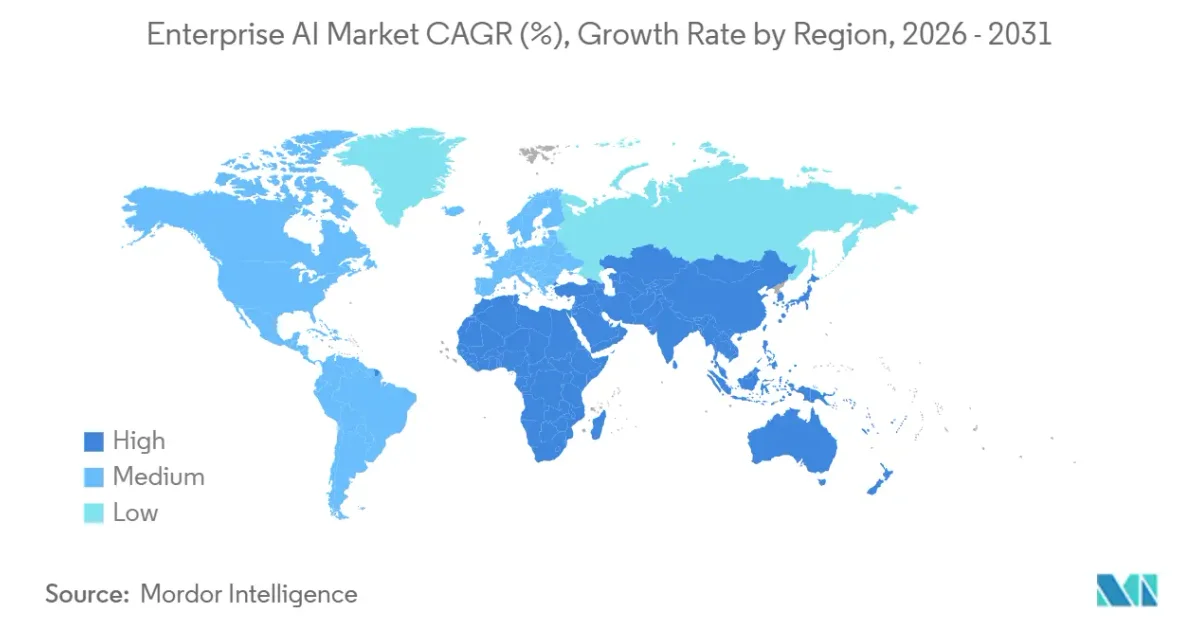
Imagine a market expanding from $900 billion this year to over $4.2 trillion by 2035, growing at an impressive 18.73% annually. This isn't a distant dream; it's the reality of the AI industry in October 2026. We are witnessing a monumental shift, moving past mere experimentation into a phase where AI is operationalized for tangible business value. For anyone looking to start your own AI business, these developments are not just interesting; they are critical.
The focus has sharpened. Generic AI tools are facing intense competition, while deeply specialized, industry-specific solutions are emerging as the true differentiators. Agentic AI, capable of independent reasoning and task execution, is no longer a futuristic concept but a daily reality for many businesses. However, this rapid advancement brings its own set of challenges, from ethical considerations to security vulnerabilities. Understanding this dynamic landscape is your first step towards building a successful venture.
The Unstoppable Surge: AI's Trillion-Dollar Trajectory in October 2026
The numbers speak for themselves. The global AI market is projected to reach approximately $900 billion in 2026, according to Precedence Research. Another estimate places the market at $539.5 billion this year, growing to $3.5 trillion by 2033 with a compound annual growth rate (CAGR) of 30.6%, as reported by Grand View Research. Global spending on AI is set to hit $2.7 trillion in 2026, marking a significant 49.5% increase year-over-year.
This explosive growth is fueled by massive investment. In Q1 2026, AI startups captured an astonishing $242 billion, representing about 80% of all global venture funding. By Q3 2026, another $102 billion flowed into AI startups, accounting for 64% of global venture capital. This indicates a clear investor confidence in the sector's long-term potential.
What's driving this financial fervor? A clear shift from isolated AI use cases to operationalizing AI across core business processes. Thomas Davenport and Randy Bean aptly predicted 2026 would be a "level-set year" for AI, pushing companies to focus on enterprise value and the organizational structures needed for scaled deployment. It's no longer about proving AI's capability; it's about integrating it effectively to drive measurable results.
Agentic AI Takes Center Stage: Opportunities and Challenges
Agentic AI systems, designed to reason, plan, and execute tasks autonomously, are no longer pilot projects. They are moving into full operational deployment across industries. Executives report widespread adoption, with 97% of companies deploying AI agents in the past year. Furthermore, 52% of employees are already using them daily, a testament to their growing integration into everyday workflows. By the end of 2026, up to 40% of enterprise applications are predicted to integrate these task-specific AI agents.
This rapid adoption creates immense opportunities for entrepreneurs who can build and deploy effective agents. We are seeing real-world examples emerge: Fujitsu Limited is trialing four AI agents to enhance retail store operations and decision-making, with an official launch planned for June 2027. Google DeepMind released its Gemini 3 family of multimodal AI models, specifically designed to process various data types and power AI agents with advanced reasoning. Companies like Skydive are developing AI agents that integrate directly into tools like Gmail and GitHub, automating complex cross-software workflows.
However, the path to agentic AI dominance is not without bumps. Some experts caution that agentic AI is not yet "ready for prime time." Ongoing issues with hallucinations, mistakes, and security vulnerabilities like prompt injection mean a "human in the loop" approach remains crucial for guardrails. This presents an opportunity for businesses to offer solutions that combine agentic AI capabilities with robust oversight and validation mechanisms.
Building Your AI Business: Niche Solutions and the "AI Store" Model
The market is maturing, and the days of generic AI tools dominating every sector are fading. The trend is moving decisively towards deeply specialized, industry-specific AI solutions. These niche offerings provide a competitive edge by addressing precise problems for defined audiences. Instead of building a general-purpose chatbot, entrepreneurs are finding success in creating AI agents for specific tasks, like legal document analysis (Harvey) or enterprise search (Glean).
A new business model, often termed the "AI Store" model, is gaining traction. This involves creating AI-powered "stores" that sell automated products, services, or workflows. AI acts as the core value driver, enabling entrepreneurs to ship quickly, prove demand, and scale with minimal upfront costs. This approach emphasizes agility and targeted problem-solving, perfectly aligning with the shift towards specialized AI.
Platforms like TashiOS are designed to empower this new wave of AI entrepreneurship. TashiOS is an AI cloud desktop that runs on your private VPS, bundling the OS, VPS, and monthly AI credits into one flat subscription. It lets you create websites, apps, automations, and digital products, then sell them to your own customers for recurring income. This means you can focus on developing your niche AI solutions without juggling an array of separate tools for hosting, coding, and client management.
The traditional method of stitching together AI chat, code editors, hosting, website builders, automation tools, and client management is cumbersome. TashiOS combines all of that into one cloud workspace. Its built-in AI assistant, Skynet, can build apps or websites from your plain English descriptions, eliminating the need for coding. This unique approach helps freelancers, entrepreneurs, and agencies build client-ready digital products efficiently, giving them full data control and ownership of everything they create on their own server.
Navigating the New Frontier: Governance, Safety, and Ethical AI
As AI becomes more integral to business operations, governance is no longer optional. It has become a commercial requirement and a strategic success factor. Concerns about safety, control, and ethics are prominent, shaping both product development and regulatory oversight. OpenAI, for example, delayed the planned October release of its next-generation model, GPT-6.1 Astra, due to safety and alignment failures, underscoring the critical importance of robust safeguards.
Regulators are also stepping up. The UK government released an AI Risk Management Toolkit, and the Financial Conduct Authority (FCA) outlined its expectations for frontier AI and cyber resilience. In the US, the Federal Trade Commission (FTC) has opened an investigation into the risks posed by AI agents. While some, like Sam Altman of OpenAI, suggest accepting "bad things" like hacks in exchange for AI's benefits, industry insiders have warned New York City council members about a "reckless culture" at major tech firms racing to create uncontrollable technology. This highlights the ongoing tension between rapid innovation and responsible deployment, creating a demand for businesses that prioritize ethical AI development and robust governance frameworks.
Why TashiOS is Your Command Center for AI Entrepreneurship
Starting an AI business in October 2026 means navigating complex technological stacks and market demands. Many entrepreneurs struggle with the sheer number of tools needed: AI chat, code editors, hosting, website builders, automation platforms, email marketing, and client management. This fragmented approach slows down development and increases operational overhead.
TashiOS directly addresses this challenge by providing an all-in-one AI-powered cloud desktop. It simplifies the entire process of creating, selling, and managing digital products and automations. Here's how it helps:
- AI Builds, You Earn: With Skynet, the built-in AI assistant, you describe an app or website in plain English, and it builds it for you. This means no coding is required, drastically cutting down development time and technical barriers.
- Full Ownership and Control: Everything you build, from apps and code to customer data, belongs to you and lives on your own private VPS. This gives you complete data control and eliminates vendor lock-in, a significant advantage in an era of increasing data privacy concerns.
- Predictable, Flat Costs: TashiOS offers a simple $49/month flat subscription. This includes your private VPS, the cloud desktop, over 25 built-in apps, and $150 in AI credits ($100 starter budget plus a $50 bonus). This predictable pricing model stands in stark contrast to the variable, per-API-call billing common with cloud AI APIs, making financial planning much easier for your growing AI business.
TashiOS is built on OpenClaw, an open-source AI agent runtime, ensuring a robust and flexible foundation for your projects. It’s designed for freelancers, entrepreneurs, agencies, and side-hustlers who want to build client-ready digital products without the headache of juggling many separate tools. It's truly an AI cloud desktop for creating, selling, and managing websites, apps, and automations as a recurring-income business.
If you are ready to seize the opportunities of the booming AI market and start your own AI business, consider a platform that brings all the essential tools together. You can explore how TashiOS simplifies the journey and empowers you to build, deploy, and profit from the latest AI advancements.
The Future of Work: AI's Impact on Jobs and Productivity
AI's influence extends deeply into the labor market, reshaping how we work and what skills are valued. Productivity gains from AI are significant, particularly in structured, measurable work. Studies report gains of 14-15% in customer support, 26% in software development, and an impressive 50% in marketing output, as highlighted by ThoughtMinds.ai. A substantial 60% of business owners believe AI will increase their productivity, signaling a widespread recognition of its transformative power.
While AI is projected to eliminate 85 million jobs by 2025, it is also expected to create 97 million new ones, resulting in a net gain. However, AI's labor market effects are uneven. For instance, employment for software developers aged 22-25 fell nearly 20% from 2024, indicating a shift in demand within certain roles. One-third of organizations anticipate workforce reductions in the coming year due to AI, prompting a focus on reskilling and upskilling initiatives.
The overarching theme is human-AI collaboration and augmentation rather than outright replacement. AI is increasingly amplifying human capabilities, handling tedious and repetitive tasks while humans remain the final decision-makers and strategic thinkers. This trend emphasizes the importance of building AI solutions that empower people, making them more efficient and effective, rather than simply replacing them.
Conclusion: Your Moment to Build and Earn
October 2026 presents an unprecedented opportunity to start your own AI business. The market is expanding at an incredible rate, driven by a clear shift towards operationalizing AI and the widespread adoption of agentic systems. Success lies in focusing on niche, specialized solutions that solve specific problems, embracing the "AI Store" model, and prioritizing robust governance and ethical practices.
The tools and platforms available today make it easier than ever for entrepreneurs to enter this dynamic field. With solutions like TashiOS, you can overcome the complexities of technology and focus on innovation, knowing your infrastructure, AI tools, and client management are integrated into one powerful workspace. The future of work is collaborative, AI-powered, and ripe with opportunities for those ready to build.
Are you ready to turn these trends into your next big venture? Explore how you can leverage the latest AI advancements to create, sell, and manage your own digital products and services. You can start building your AI business today with a 7-day free trial at tashios.com/pricing, with $0 charged today and the freedom to cancel before day 8.