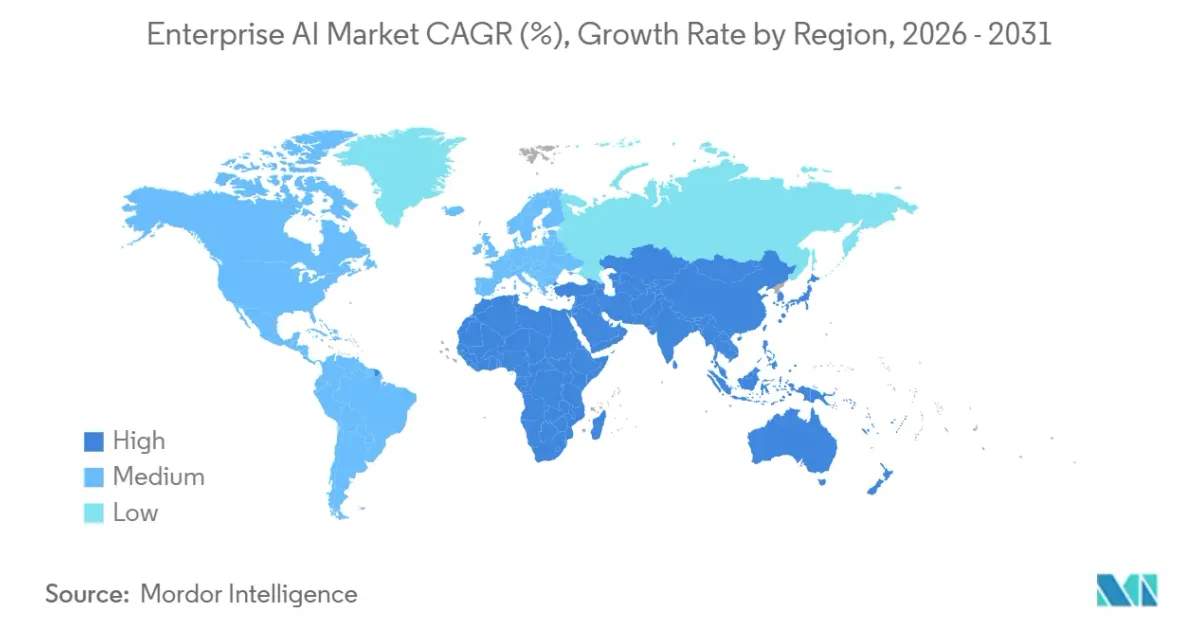
Global AI spending is set to explode to an astounding $2.59 trillion in 2026, marking a 47% year-over-year increase. But what does that monumental growth mean for you, the aspiring entrepreneur or agency owner looking to build a thriving business? It means opportunity, but also a need for smart strategy.
The AI market isn't just growing; it's maturing. We're moving beyond experimental AI pilots into core business infrastructure. This article provides a comprehensive overview of the latest developments in October 2026, helping you understand how to start business with AI effectively.
The AI Business Landscape in October 2026: A Golden Era for Entrepreneurs
The AI market is experiencing explosive growth, with generative AI (GenAI) leading the charge. By 2026, GenAI is expected to account for 10% of all data produced, a significant leap from less than 1% previously. This shift means AI isn't just a niche technology; it's becoming integral to how we create and operate.
A major development is the transition from simple AI tools to agentic AI. These systems can plan, act, check their own work, and even hand off decisions to humans when needed. Gartner projects that by the end of 2026, around 40% of enterprise applications will include task-specific AI agents, a substantial increase from under 5% just a year prior. This evolution allows small teams to manage complex tasks like research, lead qualification, and customer support with much less manual effort.
The payback period for GenAI investments has dramatically compressed. It went from about 18 months in 2024 to roughly 4-5 months in 2026. This shows the effectiveness and maturity of current AI tools, making it an ideal time for new ventures.
Agentic AI and Hyper-Specific Solutions: Your Path to Profit
Experts emphasize that success in the AI business in 2026 comes from identifying and solving hyper-specific problems within particular industries. Building generic AI tools is less effective now. The mantra for entrepreneurs is clear: "2026 isn't about building big products first; it's about shipping fast, proving demand, and then scaling."
Agentic AI is the key here. Instead of building a broad AI platform, focus on creating agents that do one boring, essential job inside one industry. This approach reduces complexity, accelerates market entry, and allows for rapid validation of your business idea.
Real-World AI Business Success Stories (2025-2026)
The market is already seeing profitable AI startups focusing on vertical-specific solutions. Here are some real examples from 2025-2026:
- Legal Tech: Companies like EvenUp automatically generate demand letters for personal injury cases. Steno automates deposition transcription. Ankar assists firms in navigating vast patent databases with AI-assisted search. Legal tech funding reached $5.99 billion in 2025.
- Insurance: Firms such as Tractable, Shift Technology, and Gradient AI have built purpose-built AI for claims and underwriting workflows. Shift Technology works across fraud detection, prior authorization, and liability assessment for global insurers. Gradient AI's revenue more than doubled in the first two quarters of 2025. The AI in insurance market is projected to reach $13.45 billion in 2026.
- Healthcare: Ambience Healthcare offers an AI operating system for documentation, coding, and clinical workflows, raising $243 million in Series C funding in 2025. Blossom is building AI Copilots & Agents for Psychiatry, securing $20 million in Series A funding in 2025.
- Cybersecurity: Doppel is developing an AI-native security platform to defend against social engineering risks and digital impersonation, with a $70 million Series C funding round in 2025.
- Operational Automation: Startups are emerging to automate regulatory compliance reporting, autonomous bookkeeping, construction site monitoring, and more. Skydive, which launched publicly in September 2026, builds AI agents that log into tools like Gmail and GitHub to complete multi-step workflows, after an $11 million Series A in September 2025.
Navigating the AI Regulatory Maze and Ethical Imperatives
The regulatory environment for AI is rapidly evolving, making compliance a new competitive advantage. The EU AI Act's transparency rules became applicable on August 2, 2026. These rules require users to be informed when interacting with an AI system and when content is AI-generated.
In the U.S., Texas enacted the Responsible Artificial Intelligence Governance Act, effective January 1, 2026. California's AB 2013 requires generative AI developers to disclose training data sources. September 2026 legislation in California also established standards for independent AI assessments.
A critical expert opinion highlights the importance of ethical AI. Privacy concerns now outweigh job displacement fears. Building ethical AI from the ground up is essential for long-term survival and a powerful differentiator. Ignoring early ethical risks and regulatory changes can lead to significant legal and reputational damage.
How to Start Business with AI: Tools and Strategies for 2026
For entrepreneurs, the current AI landscape offers immense opportunities, but it also demands strategic navigation. Here are key strategies and tool categories:
- Niche Focus: As discussed, the most profitable AI business ideas in 2026 are "vertical AI agents that do one boring job inside one industry."
- Business Models: Common AI business models include Agency (using existing AI tools to build solutions for clients), SaaS (building AI-powered software with subscription revenue), and Service/Consulting (using AI to deliver professional services). Many founders start with agency or service models and evolve into SaaS.
- Validation First: It is critical to validate market demand by talking to potential customers and testing solutions before investing heavily in development.
- Regulatory Compliance: Embed compliance, including AI Act requirements and data sovereignty laws, into core operations from day one.
- Hybrid Infrastructure: Successful AI companies often adopt hybrid infrastructure approaches. They use cloud services like AWS Bedrock or Google Cloud Vertex AI for inference while maintaining dedicated on-premise GPU clusters for training custom models.
For entrepreneurs looking to build and sell AI-powered solutions without the usual headaches, platforms like TashiOS offer a unique advantage. TashiOS is an AI-powered cloud desktop that runs on your own private VPS. It bundles the OS, the VPS, and monthly AI credits, letting you create websites, apps, automations, and digital products to sell for recurring income.
Why TashiOS is Your AI Business Launchpad
Starting an AI business often means juggling many separate tools: AI chat, code editors, hosting, website builders, automation tools, email platforms, and client management. TashiOS solves this problem by combining all of that into one cloud workspace. It's designed for freelancers, entrepreneurs, agencies, and side-hustlers who want to build client-ready digital products efficiently.
A key differentiator for TashiOS is Skynet, its built-in AI assistant. You simply describe an app or website in plain English, and Skynet builds it. No coding is required, which significantly lowers the barrier to entry for non-technical founders. Furthermore, everything you build, including apps, code, and customer data, belongs to you and lives on your own server. This means full data control and no vendor lock-in, which is crucial in a regulatory landscape focused on data privacy.
TashiOS offers a predictable flat monthly cost of $49. This includes your private VPS, the cloud desktop, over 25 built-in apps, and $150 in AI credits ($100 starter budget + $50 bonus). This transparent pricing stands in contrast to the often unpredictable per-API-call billing of cloud AI APIs, giving you peace of mind.
Ready to transform your ideas into income? Discover how TashiOS can streamline your AI business journey and empower you to build, deploy, and profit. Start your 7-day free trial today at tashios.com.
Choosing Your AI Tool: A Comparison for Startups
Starting an AI business in 2026 often involves leveraging existing AI tools and platforms rather than building foundational models from scratch. The focus is on integration, customization, and application to specific business problems.
No-Code/Low-Code AI Platforms
These platforms empower non-technical teams to build AI-powered applications and workflows using visual interfaces. Gartner projects that over 70% of enterprise AI implementations will include a no-code or low-code orchestration layer by 2026.
- StackAI: A dedicated no-code AI orchestration platform for enterprise-scale operations, particularly in regulated sectors. It offers graphical tools to design AI-powered workflows and agents, supporting over 100 business systems integrations. It is SOC 2, HIPAA, and GDPR compliant.
- Lindy AI: A no-code platform for building agents that follow configured workflows and use connected tools. It features a visual editor and integrations for email, calendars, CRMs, and voice calls.
- Sim AI: An open-source platform for building agents via a visual canvas or natural language. It connects models, company data, and business applications, deploying workflows as APIs or chat interfaces.
- Zapier: Known for fast automation, it now offers Zapier Canvas, AI by Zapier, and Zapier Agents for building AI-powered workflows.
- Make: Facilitates branching and complex workflows with its Maia and Make AI Agents, supporting advanced automation.
- Bubble: A powerful visual builder for complex web apps, SaaS, and marketplaces, now incorporating AI agent builds and edits.
- Zite: Specializes in AI-built UIs and offers a built-in database with unlimited users, ideal for non-technical teams building business applications.
Pros: Speed, accessibility for non-technical users, rapid prototyping. Cons: Can have limitations in customization, potential vendor lock-in, reliance on platform features.
Cloud AI Platforms (AI as a Service - AIaaS)
These platforms provide access to pre-trained models, machine learning services, and infrastructure, reducing the barrier to entry for AI development.
- AWS Bedrock: Amazon's fully managed service that makes foundation models from various labs accessible via an API.
- Google Cloud Vertex AI: Offers a unified platform for building, deploying, and scaling machine learning models, including access to Google's own foundation models.
- Microsoft Azure AI: Provides a comprehensive suite of AI services, including pre-built cognitive services and machine learning platforms.
Pros: Access to cutting-edge models, scalability, managed infrastructure. Cons: Per-API-call billing can be unpredictable and costly at scale, data privacy concerns for sensitive information, less control over the underlying infrastructure compared to self-hosting like TashiOS.
Specialized AI Development Tools and Infrastructure
For more complex or custom AI solutions, startups may leverage specialized tools.
- Hugging Face: The leading platform for open-source AI models and tools, offering a vast repository of models.
- SiliconFlow: An all-in-one AI cloud platform that provides a unified interface for inference, fine-tuning, and deployment, boasting faster inference speeds.
- NVIDIA: Remains foundational, supplying the GPU compute that nearly all other AI companies rely on.
- Databricks: Offers a data intelligence platform and lakehouse architecture for managing data pipelines and AI governance at scale.
- OpenAI, Anthropic, Mistral AI: These companies develop and provide access to cutting-edge foundation models and AI APIs.
Pros: Deep customization, high performance, access to raw power. Cons: High technical barrier, significant cost, requires substantial ML engineering expertise.
Recommendation: For entrepreneurs focused on building and selling recurring digital products with AI, especially those prioritizing ease of use, predictable costs, and data ownership, integrated cloud desktop solutions like TashiOS are often the best starting point. For simple automations, no-code platforms are great. For highly specialized research or complex custom models, specialized development tools are necessary.
Conclusion: Build Smart, Earn Big
The AI market in October 2026 is dynamic and full of potential for those ready to innovate. Success hinges on a niche focus, rapid validation, and a deep understanding of agentic AI. Regulatory readiness and ethical considerations are not just good practices; they are essential for long-term viability.
By choosing the right tools and strategies, you can turn this technological revolution into a profitable venture. Platforms like TashiOS empower you to quickly build, deploy, and manage AI-powered digital products, giving you full control over your creations and your business.
The future of AI business is here, and it's built on speed, specialization, and smart tools. Don't just watch the market grow; be a part of it. Explore TashiOS and start building your AI-powered recurring income business today. Visit tashios.com/pricing to begin your free trial.