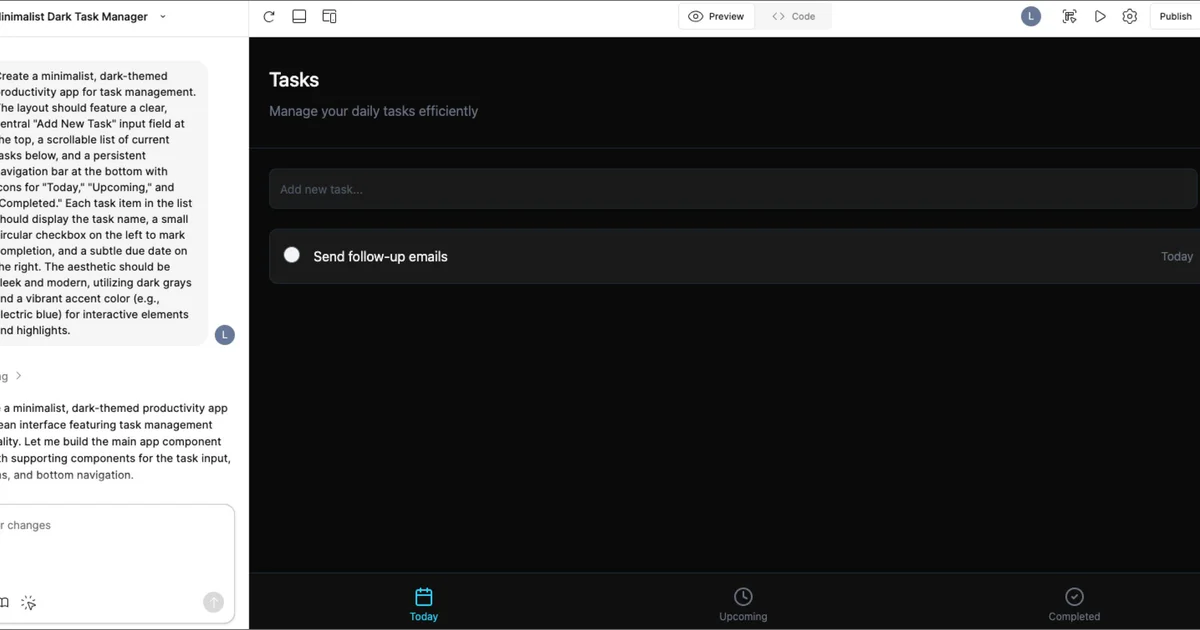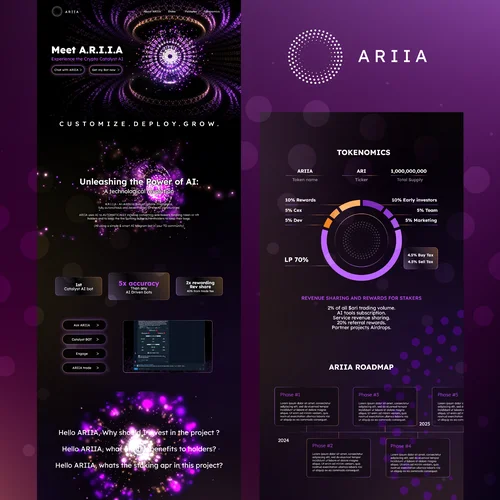
In September 2026, the world of AI website and app builders isn't just growing, it's skyrocketing. Did you know the average time to produce a complete website draft has plummeted from a full work week to just 15 minutes? This incredible speed shows how deeply AI has integrated into the development cycle. We're seeing a shift from simple prompt-based tools to sophisticated platforms that collaborate with creators in real time. This guide explores the latest developments, key players, and what this means for you.
The AI Website and App Builder Revolution of September 2026
AI has fundamentally changed how we approach design and development. By 2026, it's not just automating tasks, it's acting as an advanced design assistant. Tools now offer accessibility improvements, refined typography, and color palettes based on real-world data. AI-driven layout optimization and automated A/B testing provide real-time recommendations for optimal designs. This marks a clear move towards genuine collaboration between humans and AI.
Frontend generation has improved dramatically. Modern AI app builders now produce clean, responsive user interfaces (UIs) with real design quality and logical component structures. Design consistency, a previous weak point, has also seen major improvements. AI is now embedded across the entire web development lifecycle. This includes code generation, testing, deployment, monitoring, personalization, and adaptive design.
A notable trend is the emergence of "Agentic UI." These application interfaces dynamically generate and morph in real time, responding to user intent and historical context. This allows autonomous AI agents to manage complex backend workflows behind fluid, tailored layouts. Furthermore, multimodal AI, which combines text, image, voice, and video understanding, is becoming standard. This enables richer and more natural interactions with applications.
However, major prompt-based tools still struggle with databases, authentication, and maintaining coherence on larger, more complex projects. Experts suggest that future differentiation among tools will depend on their backend capabilities. How effectively they manage application complexity, rather than just frontend visual quality, will be the key factor.
Key Insights: What Experts and Data Say About AI Builders
The impact of AI on development is clear, but it's not about replacement. AI primarily augments web developers, not replaces them. While AI automates repetitive tasks like coding, testing, and debugging, human developers remain crucial. They handle architectural decisions, security, product strategy, and user experience.
A significant challenge is that AI-generated code is often "almost right." This can lead to developers spending more time fixing AI output than they saved writing it. This contributes to technical debt if not properly reviewed and refactored. According to a Stack Overflow Survey from late December 2025, 84% of developers use or plan to use AI tools, but only 3% "highly trust" the output. Projects heavily using AI tools also saw code churn, lines rewritten within two weeks, jump by 39%. Pull requests with AI-assisted code carry roughly 1.7x more issues than human-written code.
"The differentiation between tools will increasingly come down to backend capability and how well they handle application complexity, not frontend visual quality."
"AI is incredible. AI is exhausting. Both are true at once." This quote perfectly captures the dual nature of AI tools, offering immense productivity gains but also requiring careful oversight.
"The winners treat AI output as a draft, not a deliverable." This highlights the importance of human review in AI-assisted development.
Top AI Website and App Builders You Should Know (September 2026)
The market is buzzing with innovative AI website and app builders. Here are some of the standout platforms as of September 2026:
- Wix AI: Known for powerful AI tools combined with extensive customization options. It creates a complete, customized website in minutes, including content, branding, and SEO.
- Hostinger AI Builder: This platform reached 1 million users in its first year, with 93-95% of its users being first-time website builders. It generates complete sites in under a minute.
- Base44: An AI app builder that lets users describe their desired web app or website in plain language. It delivers a working product in minutes, complete with built-in data, logic, and integrations. It focuses on functional apps, not just pages.
- Lovable: Described as an "AI software engineer," Lovable generates production-ready React code with Tailwind CSS. It configures a Supabase backend, sets up authentication, and deploys to a live URL, with genuinely useful GitHub sync.
- Bolt.new: This browser-based AI development environment offers faster pure frontend prototyping and framework flexibility. It supports React, Vue, Svelte, and Astro, noted for its speed from prompt to deployed web app.
- Replit Agent: An autonomous AI coding agent that builds, tests, and fixes full web apps. It supports over 50 programming languages and frameworks, with best performance in JavaScript, TypeScript, and Python.
- FlutterFlow: Best for real native apps with full code ownership. It offers AI acceleration without sacrificing native output or code control.
- Elementor (Angie by Elementor): A free, standalone agentic AI for WordPress. It reads plugins, themes, and custom post types to plan and execute website creation (elementor.com).
The Numbers Don't Lie: Market Growth and Adoption
The market for AI website and app builders is experiencing rapid growth, reflecting broad adoption:
- The global **no-code AI platform market** was valued at $6.56 billion in 2025 and is projected to reach $8.6 billion in 2026. It's on track to hit $75.14 billion by 2034, with a compound annual growth rate (CAGR) of 31.13% (truelysis.com).
- The global **AI website builder market** specifically was $2.69 billion in 2025, projected to grow to $3.24 billion in 2026. It is expected to reach $17.43 billion by 2035, expanding at a CAGR of 20.55% from 2026 to 2035 (aipxperts.com).
- The broader **low-code development market** is valued between $26–50 billion in 2025 and is projected to reach $44.5 billion by 2026. It is expected to reach $94 billion by 2028 (ozvid.com).
Adoption Rates:
- 70% of new enterprise applications will use low-code or no-code tools by 2026, a significant increase from less than 25% in 2020 (Gartner Prediction).
- 90% of developers regularly use at least one AI tool at work as of January 2026.
- 63% of AI app builder and "vibe coding" users are non-developers, indicating a democratization of software creation.
- 58% of small businesses now use generative AI, up from 23% in 2023.
Productivity and Cost Savings:
- AI tools lead to a 55% faster completion of coding tasks in controlled experiments.
- AI website builders are reducing costs by 50–90% for common website types compared to traditional development.
Worldwide AI spending is forecast to reach $2.52 trillion in 2026, a 44% year-over-year increase. Venture Capital funding in no-code/low-code startups reached $4.8 billion in 2025. Generative AI apps saw 1.7 billion downloads in H1 2025, with in-app purchase revenue nearly doubling to $1.9 billion. North America holds approximately 43% of the global AI website builder market share (designrush.com).
Why TashiOS is Your Command Center for AI-Powered Creation
While many AI tools specialize in one aspect of building, the real power comes from an integrated approach. This is where TashiOS shines. TashiOS is an AI-powered cloud desktop that runs on your private VPS. It's designed for freelancers, entrepreneurs, and agencies who want to build, sell, and manage websites, apps, and automations as a recurring-income business. Instead of juggling separate tools for AI chat, code editing, hosting, website building, and client management, TashiOS combines all of that into one unified workspace.
With TashiOS, you describe an app or website in plain English, and Skynet, the built-in AI assistant, builds it for you with no coding required. This means you can create client-ready digital products without the usual hassle. A key differentiator is that TashiOS helps you create, sell, AND manage digital products from one place. Plus, everything you build, including apps, code, and customer data, belongs to you and lives on your own server. This gives you full data control and no vendor lock-in.
Ready to experience the future of AI-powered digital product creation and turn your ideas into income? Explore how TashiOS can streamline your workflow and empower you to build more. Visit TashiOS today.
Practical Implications: What This Means for You
The rapid evolution of AI website and app builders brings significant changes for both businesses and developers.
For Businesses:
- Rapid Prototyping and Deployment: Businesses can launch functional websites and apps significantly faster and at a lower cost. This enables quicker market entry and iteration.
- Democratization of Development: Non-technical business users, often called "citizen developers," are increasingly empowered to build their own solutions. This reduces reliance on IT departments and helps address developer shortages.
- Hyper-Personalization: AI-powered tools enable dynamic content adaptation and personalized user experiences. This boosts engagement and conversions.
- Focus on Storytelling and Trust: As AI-generated content becomes more prevalent, human-crafted design elements, brand storytelling, and clear trust signals will become even more crucial for differentiation.
For Developers:
- Shifting Role: Developers are evolving into system designers and problem-solvers. They focus on higher-level architecture, complex integrations, and strategic decisions, while AI handles repetitive coding tasks.
- New Skillsets: Proficiency in "prompting" AI tools with precise questions and rigorously "reviewing" AI-generated code is becoming essential. This includes checking for subtle bugs, security issues, and inefficiencies.
- Increased Productivity: AI tools are integrated into daily workflows, helping with boilerplate code, debugging, and refactoring. This leads to significant productivity gains.
- Managing Technical Debt: Developers must be vigilant about the quality of AI-generated code. This prevents the accumulation of technical debt, which can arise from "almost right" solutions.
General Predictions:
- Agentic AI Systems: The future will see more autonomous AI agents capable of completing multi-step tasks without human intervention. This will lead to self-improving applications.
- AI-Native Architectures: Applications will increasingly be designed around AI logic from the ground up, rather than having AI added as an afterthought.
- Convergence of AI and No-Code/Low-Code: This convergence will continue to create "intelligent automation platforms." It will further blur the lines between traditional development and automated creation (mindstudio.ai).
- Ethical AI and Sustainability: Ethical considerations, privacy-first approaches, and sustainable AI practices will gain prominence as the technology becomes more pervasive.
The Road Ahead for AI Builders
The landscape of AI website and app builders in September 2026 is dynamic and full of potential. We've moved beyond simple automation to a collaborative partnership with AI. While challenges remain, especially with backend complexity and code quality, the benefits are undeniable. Businesses can launch faster and non-technical users can create more. Developers can focus on higher-value tasks.
The future promises even more sophisticated agentic systems and AI-native architectures. Platforms like TashiOS are leading the charge in providing an all-in-one environment for this new era of creation. With a flat $49/month subscription that includes your private VPS, cloud desktop, 25+ apps, and $150 in AI credits, TashiOS makes it easy to start building and earning. You get predictable costs instead of per-API-call billing, and your prompts and data stay on your own VPS. The setup is fully automated, so you can pick a plan, and start building from any browser within minutes.
Are you ready to build the future? Discover how AI builds and you earn. Start your 7-day free trial today at tashios.com/pricing.