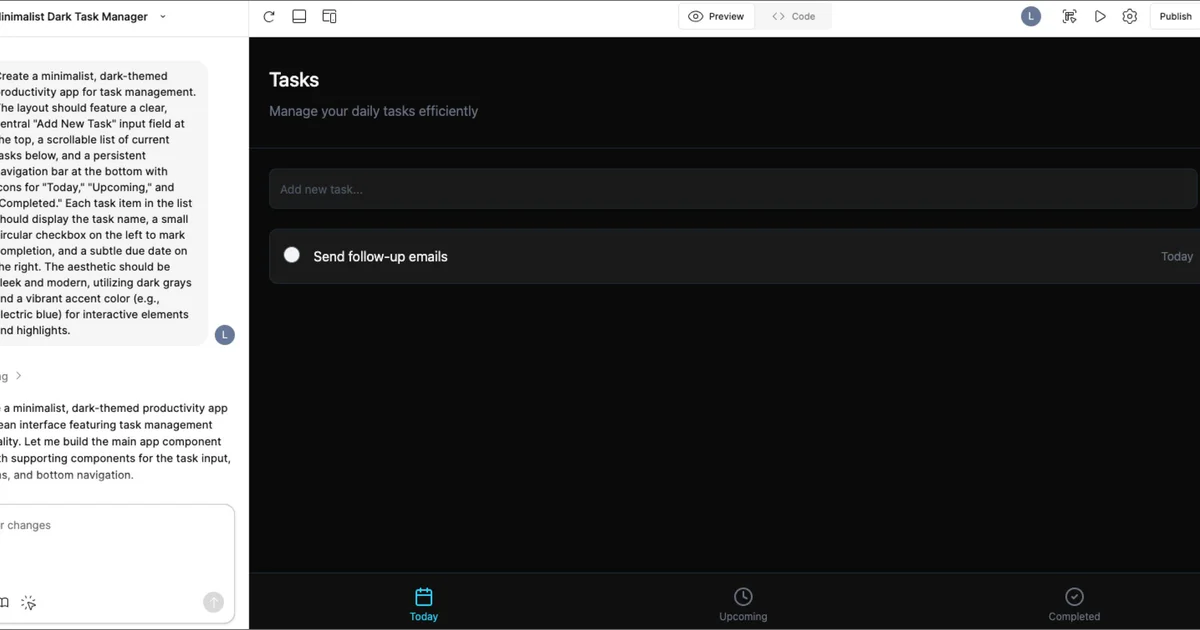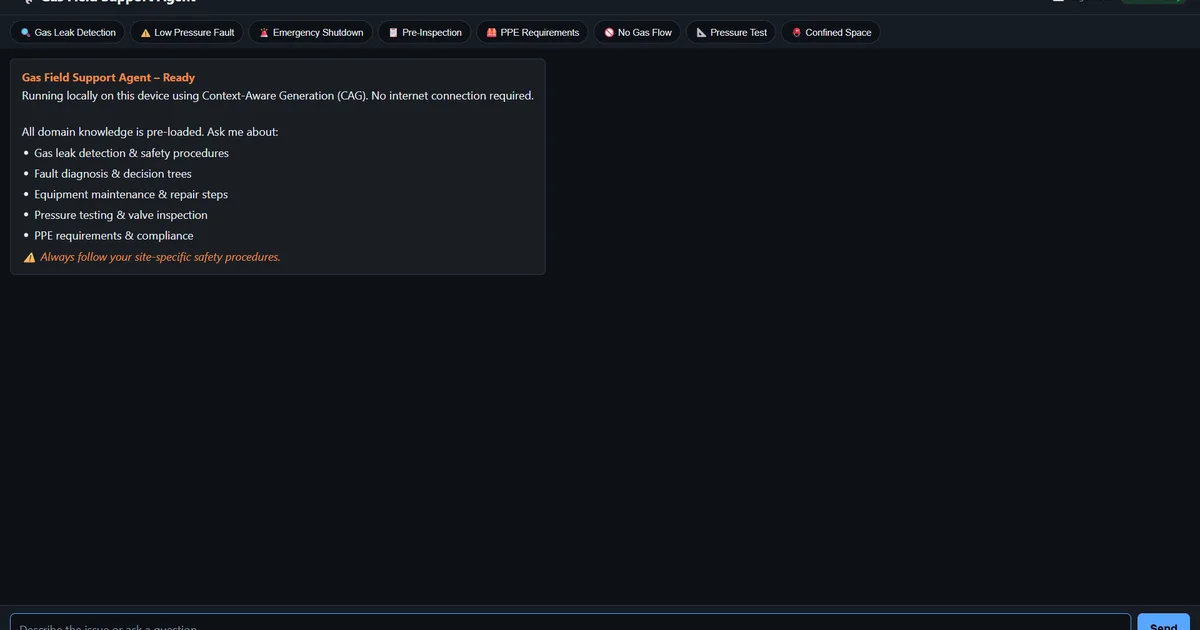
Imagine building a sophisticated AI application by simply describing what you want in plain English. This isn't a futuristic fantasy for September 2026; it's a daily reality for a rapidly growing number of businesses and citizen developers. In fact, Gartner forecasts that a staggering 70% of all new applications developed by organizations will use low-code or no-code technologies by 2025, a prediction that now holds true. This dramatic shift highlights how no-code AI app building is democratizing technology, moving intelligence out of specialized labs and into the hands of everyone.
The global no-code AI platform market, valued between $3.91 billion and $7.06 billion in 2025, is now projected to hit anywhere from $4.73 billion to an astounding $21.2 billion in 2026, with some segments seeing a compound annual growth rate (CAGR) of over 70% [source 1, 3, 4, 6]. This isn't just growth; it's an explosion, reshaping how we think about software development and who gets to build the future.
The No-Code AI Explosion: A Market Snapshot for September 2026
The numbers don't lie. The no-code AI app building sector is experiencing unprecedented expansion. By 2026, the market for no-code development platforms overall is projected to reach approximately $52 billion, compounding at nearly 28% annually from its 2023 base [source 7]. This immense growth is fueled by a global shortage of AI professionals and an insatiable demand for intelligent solutions.
A significant development in late 2025 and early 2026 is the deep integration of artificial intelligence, especially large language models (LLMs) and generative AI, directly into no-code platforms. This means users can now describe their desired applications using natural language, a trend affectionately called 'vibe coding'. These intelligent tools then generate the underlying architecture, database schemas, and even frontend components, dramatically speeding up development time.
The impact extends far beyond IT departments. By 2026, 80% of people using low-code will be outside traditional IT roles, essentially transforming business users into 'citizen developers' [source 7]. This empowers individuals with domain expertise to build custom solutions, rather than waiting for overstretched IT teams. Fortune 500 companies have certainly taken notice, with 38% adopting no-code solutions by early 2026 [source 7].
Beyond the Hype: Key Trends and Expert Insights
The rise of no-code AI app building is more than just a technological shift; it's a fundamental change in how businesses operate. It addresses the critical bottleneck of a shortage of AI engineers and data scientists, estimated at over 1.5 million globally, by putting AI application development into the hands of business users.
Speed, Efficiency, and the AI Agent Revolution
Organizations report incredible gains in development speed, often seeing up to a 90% reduction in time, compressing months of work into weeks or even days. Development teams using no-code are 2.7 times faster than traditional methods. This efficiency also translates to cost savings, with companies cutting development costs by 70% using low-code solutions [source 7].
A major driver of this growth is the proliferation of AI agents. These digital workers understand instructions, make decisions, and complete tasks autonomously. The AI agent market reached $7.84 billion in 2025 and is projected to grow to an impressive $52.62 billion by 2030 [source 7]. These agents are becoming the backbone of automated business processes, from customer support to data analysis.
The AI Productivity Paradox and Shifting Value
Paul Dhaliwal, Founder & CEO of CodeConductor, notes that by 2026, AI and no-code tools are no longer a novelty but infrastructure. He states, "Speed used to signal competence. Now it simply signals access to the same tools everyone else has. The real differentiation is moving elsewhere: judgment, focus, validation, and the ability to design systems that hold up over time."
This insight points to a crucial, non-obvious conclusion: while AI coding tools are widely adopted (82% of developers use them weekly in Q1 2025), a study found that developers using AI tools actually took 19% longer to complete tasks than those without, despite believing they were 20% faster [source 7]. This 'AI Productivity Paradox' shows that AI amplifies velocity in specific, simpler contexts but can degrade performance in others, particularly with complex tasks requiring nuanced judgment. The value is shifting from raw execution speed to strategic thinking and robust system design.
Real-World No-Code AI Platforms and What They Build
The market is rich with innovative platforms, each offering unique strengths for no-code AI app building. These tools are transforming how businesses create everything from internal dashboards to customer-facing applications:
- Microsoft Corporation: A leader with its Power Platform, including AI Builder, which helps users create and use AI models for business tasks. Microsoft's focus extends to 'agentic applications,' AI systems that act on a user's behalf, as showcased at Microsoft Build 2026.
- Dify and FlowiseAI: These platforms allow users to build applications that connect and orchestrate large language models by simply describing their requirements.
- Airtable: Its conversational AI builder, Omni, launched in 2025, allows users to describe workflows and internal tools in natural language, automating complex processes.
- Bubble: Still a leader for complex web applications, its new AI-powered 'Co-pilot' assists in scaffolding page layouts and logic flows from prompts.
- Adalo: Specializes in native mobile and web apps, with its AI assistant, Ada, building apps from prompts and introducing features through natural language.
- Softr: Great for building client portals, internal tools, and websites on top of existing data sources like Airtable or Google Sheets.
- AI Agent Builders: Platforms like Lindy (for business automation), Voiceflow (for conversational AI), Wegic (for AI-powered website building), Vertex AI Agent Builder, and Zapier Central are identified as top no-code AI agent builders in 2026.
- Atoms: This no-code AI platform uses AI agents for market research, backend building, app deployment, and optimization, allowing users to go from concept to a live product in minutes.
Other prominent companies like DataRobot, Dataiku SAS, H2O.ai Inc., RapidMiner Inc., and BigML Inc. are also major players, often focusing on enterprise-grade AI modeling and deployment [source 1].
The Hidden Costs and Challenges of No-Code AI
While no-code AI app building offers incredible advantages, it also introduces new complexities and potential pitfalls that organizations must address.
Governance and Security Concerns
The accessibility of no-code AI means more applications are being built, but this also raises significant governance challenges. Poorly designed, insecure, or non-compliant applications can proliferate rapidly. Security is a critical concern, with 62% of enterprises citing it as their primary barrier to deploying no-code AI tools [source 7]. Issues like data sovereignty and specific audit-trail requirements for sensitive information (e.g., HIPAA) can be limitations for many no-code platforms, particularly cloud-hosted ones.
Performance, Scalability, and Vendor Lock-in
No-code AI apps can hit performance and scalability limits when dealing with heavy data processing, low-latency AI responses, or rigorous compliance standards. Compared to custom-coded applications, latency accumulation can be an issue. Furthermore, applications built on a specific no-code platform are often not portable, leading to significant vendor lock-in. Industry benchmarks in 2026 show that no-code 'vendor lock-in' costs have risen by 40% [source 7], a substantial hidden expense for businesses.
For freelancers, entrepreneurs, and agencies, navigating these challenges can be daunting. You want the speed and power of no-code AI without sacrificing control or getting trapped by escalating costs. This is where a solution like TashiOS comes in, offering a different approach to building and managing your digital products.
Why TashiOS is Your AI App Building Solution
The promise of no-code AI app building is immense, but the concerns around security, data ownership, and vendor lock-in are real. TashiOS addresses these head-on, providing an AI cloud desktop for creating, selling, and managing websites, apps, and automations as a recurring-income business.
Unlike many no-code platforms that tie you to their infrastructure, TashiOS runs on your own private VPS. This means everything you build, including your apps, code, and customer data, belongs to you and lives on your server. You get full data control and avoid vendor lock-in. This is a crucial differentiator in an era where data privacy and ownership are paramount.
TashiOS bundles the VPS, the OS, and monthly AI credits into one flat $49/month subscription. This predictable pricing model contrasts sharply with the per-API-call billing common with cloud AI APIs, giving you peace of mind about costs. Its built-in AI assistant, Skynet, lets you describe an app or website in plain English, and it builds it for you, truly no-code required. It's built on OpenClaw, an open-source AI agent runtime, and ships with over 25 built-in apps and tools to help you build, automate, and run your online business.
The Future of AI App Building: Beyond 2026
As we look beyond September 2026, several key predictions for no-code AI app building emerge:
- Shift from Speed to Judgment: As Paul Dhaliwal noted, building faster becomes commonplace. The competitive advantage will increasingly come from sound judgment, focusing on the right problems, validating market demand, and designing robust, sustainable systems.
- Agent-First Workflows Become Default: Internal teams are already routinely relying on AI agents for operations, support triage, reporting, and coordination. This 'agent-first' operating model will become the standard, with a strong emphasis on reliability over novelty.
- Validation Before Investment: The ease and low cost of building prototypes with no-code AI mean that founders will be increasingly expected to validate demand for their ideas before seeking significant investment. The barrier to entry for testing concepts is now incredibly low.
- Distribution, Not Development, is the New Bottleneck: While building apps becomes trivial, standing out in a crowded market gets harder. Feature parity is common, shifting the bottleneck from development to distribution, gaining attention, and earning trust.
- Closing the Gap with Custom Code: No-code AI platforms will continue to grow more capable, eventually closing the gap with custom-coded applications for the majority of business use cases. This includes integrating more powerful AI models, better data governance tools, enterprise-grade security features, and collaborative development environments.
The world of no-code AI app building is not just evolving; it's redefining what's possible for businesses and individuals alike. The tools are here, the market is booming, and the future promises even more intelligence and automation. The challenge now is to choose platforms that empower you to build freely, securely, and with full ownership of your creations.
Ready to build your next AI-powered app or website without writing a single line of code, all while maintaining full control over your data? Explore how TashiOS can help you create, sell, and manage digital products with its self-hosted AI cloud desktop and powerful Skynet AI assistant. Your journey to becoming a citizen developer and digital entrepreneur starts today, with a 7-day free trial.