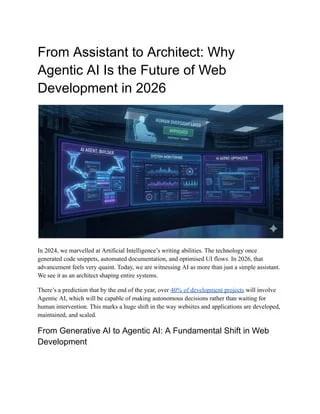
The software development world has changed forever. Just a year ago, AI app builders primarily created mockups. Now, in October 2026, they're delivering functional applications with databases, user roles, and login screens, ready to run on your company's existing data. This isn't just an upgrade; it's a revolution, democratizing software creation and making it accessible to anyone with an idea.
The AI Development Boom: October 2026's New Reality
The market for AI website and app builders is exploding. It's projected to hit $3.24 billion in 2026, a big jump from $2.69 billion last year. This robust growth won't slow down, with forecasts predicting a massive $17.43 billion by 2035, growing at a compound annual rate of 20.55%, according to Precedence Research. This boom comes from the widespread adoption of generative AI and the growing need for no-code and low-code platforms. Small and medium-sized enterprises (SMEs) are particularly driving this demand, eager to build custom solutions without the typical development overhead.
A major development this year is the maturity of "vibe coding." Andrej Karpathy coined this term to describe an iterative process where you describe desired app changes in plain language, and AI updates the code in real-time. This method drastically cuts development timelines, with AI automation now reducing them by up to 60%, as noted by Ottermind.ai. This speed means businesses can respond to market changes much faster, launching new features or entire applications in a fraction of the time. By October 2026, a remarkable 87% of mobile apps include at least one AI component, signaling a fundamental shift in how we create software and what users expect from it.
This rapid integration of AI into development workflows means that the barrier to entry for building sophisticated digital products is lower than ever. The tools are becoming smarter, more intuitive, and capable of handling complex logic, allowing a broader range of individuals and businesses to innovate.
Beyond Mockups: Production-Ready Apps for Everyone
The biggest change in AI app builders is their ability to produce more than just pretty pictures. A year ago, these tools mostly made mockups. Now, in 2026, leading platforms deliver fully functional applications. These include robust databases, user roles, and secure login screens, all capable of working seamlessly with your existing company data. This move truly democratizes development, putting powerful creation tools into the hands of many.
Steve Beyatte, a writer and entrepreneur focused on technology and AI, highlights this significant shift. He points out that the best AI app builders in 2026 give you something a team can actually log into, complete with databases, pages, and login screens, moving far past simple screen generation (thenextweb.com). This means business teams can now own their tools end-to-end, making quick adjustments and launching new initiatives without needing a developer for every change, saving both time and money.
Consider Softr, a top AI app builder highly praised for business teams. Its AI Co-Builder creates entire applications, including databases, pages, user groups, and granular permissions, all from a single prompt. It also connects effortlessly with existing company data and sets up complex workflows. Softr empowers operations and customer teams to manage their own tools, leading to faster changes and significant cost savings compared to relying on large, often inflexible, software suites. This level of control speeds up internal processes and improves customer experiences.
Another excellent example is Lovable, recognized for building full-stack web apps from plain language prompts. It can generate modern React frontends and robust Supabase backends. Founders who want a working prototype to test their ideas or secure funding without writing a single line of code find it incredibly useful. However, Assembly.com notes that while Lovable is powerful for rapid prototyping, production security and complex backend design might still benefit from expert review to ensure enterprise-grade stability and security.
"Vibe Coding" and the Rise of Citizen Developers
"Vibe coding" is more than just a buzzword; it's a powerful new way to build software. It empowers "citizen developers," people without formal coding experience, to create functional software. This approach uses natural language interfaces, letting users describe what they want, and the AI handles the technical details of translating those ideas into working applications. This removes a significant barrier, allowing creative individuals across all departments to contribute to digital product development.
Replit stands out as a key platform for "vibe coding." It offers an autonomous agent that can build, test, and even fix apps on its own. Replit takes care of essential infrastructure like hosting, databases, authentication, and monitoring, with over 100 integrations. Its Agent 4 allows non-coders to design, build, and ship software through simple natural language commands. For instance, you could tell it to "build a simple e-commerce site for selling handmade jewelry" and it would begin assembling the necessary components.
Fast Company recognized Replit in October 2026 for its advancements in "vibe coding" and AI agent platforms (fastcompany.com). The platform's ability to turn natural language into working code represents a significant leap forward, making software creation accessible to a much broader audience. This has led to impressive adoption: more than 50 million people use Replit, and an impressive 85% of Fortune 500 companies build with it, showcasing its versatility and reliability for both individual creators and large enterprises.
Market Forces and Shifting Sands
The numbers tell a clear story of acceleration and transformation. The global AI website builder market is set to reach $3.24 billion this year, up from $2.69 billion in 2025. This market is expected to surge to $17.43 billion by 2035, growing at a CAGR of 20.55%, according to Precedence Research. This consistent growth shows a clear trend towards AI-powered development becoming a fundamental part of the digital economy.
Adoption rates are soaring across the business landscape. In 2026, 58% of small businesses now use generative AI, a big jump from just 23% in 2023. This rapid embrace highlights the tangible benefits AI brings to smaller operations, from automating tasks to generating content. Worldwide AI spending is projected to hit $2.52 trillion in 2026, a 44% year-over-year increase, as reported by Hostinger. This massive investment underscores the strategic importance of AI across all industries.
The software segment led the AI website builder market in 2025, taking about 62.3% of revenue, mostly due to the popular subscription-based SaaS model (DataIntelo.com). Regionally, North America holds a significant 43% of the global AI website builder market share, with the U.S. market alone expected to reach nearly $5.69 billion by 2035. Cloud-based AI website builder tools dominate, accounting for about 81% of the market, reflecting the preference for accessible, scalable, and remotely managed solutions.
However, not all news is positive. Forbes Advisor noted in October 2026 the rising costs for small businesses using AI, particularly as they scale their use of advanced models. Google also restricted advanced Gemini AI models for lower-tier users, which could impact smaller players relying on these powerful tools for complex tasks. This highlights a growing concern about access to cutting-edge AI and the potential for increased operational expenses, especially for those who want to maintain data privacy and predictable costs.
Why TashiOS is Your AI Cloud Desktop for the Future
As AI tools become more powerful, managing them and truly owning your digital creations becomes key. Many businesses struggle with the rising costs and data privacy concerns of cloud AI APIs. This is where TashiOS steps in. It's an AI-powered cloud desktop designed specifically for creating, selling, and managing websites, apps, and automations as a recurring-income business. TashiOS runs on your own private VPS, giving you full control and ownership over everything you build, including your code and customer data. This means no vendor lock-in and complete data privacy, a critical advantage in today's data-sensitive world.
The traditional way to build and sell digital services means juggling many separate tools: AI chat, code editors, hosting, website builders, automation tools, email platforms, and client management. This patchwork approach is inefficient and costly. TashiOS combines all of that into one unified cloud workspace with AI agents that help you build, deploy, manage, and resell digital products. It's built for freelancers, entrepreneurs, agencies, and side-hustlers who want to build client-ready digital products without the headache of stitching together dozens of separate services.
TashiOS includes Skynet, its built-in AI assistant. You simply describe an app or website in plain English, and Skynet builds it for you, no coding required. This directly supports the "vibe coding" trend, making powerful development accessible to everyone, regardless of their technical background. Unlike many cloud AI APIs with unpredictable per-call billing, TashiOS offers a predictable flat monthly cost of $49. This price includes your private VPS, the cloud desktop, over 25 built-in apps, and a generous $150 in AI credits ($100 starter budget plus a $50 bonus). You get a 7-day free trial with no charge today, so you can test it out risk-free. With TashiOS, you pick a plan, your VPS is set up automatically, and you can log in from any browser to start building and earning.
Ready to take control of your AI-powered development? TashiOS offers a powerful, all-in-one solution that helps you create, sell, and manage digital products with ease. Stop managing multiple subscriptions and start building your business on a secure, self-hosted platform where you own your data and your creations.
The Future is Now: Practical Implications for Businesses and Developers
The ongoing evolution of AI website and app builders points to a major shift in the software development industry. Businesses can look forward to much faster development cycles and lower costs for creating websites and applications. The ability to generate complex components and even full applications quickly means projects move from idea to deployment at an unprecedented pace, giving companies a significant competitive edge.
The rise of citizen developers will continue to empower individuals with limited technical skills to build functional software. This will spark innovation across many sectors, as more people can bring their digital ideas to life. Think of marketing teams creating custom landing pages or HR departments building internal tools without needing to wait for IT resources. This broadens the pool of innovators and accelerates digital transformation within organizations.
This also means traditional developers will see their roles change. They'll likely shift towards AI oversight, solving complex problems, and integrating AI-generated components, rather than spending all their time on manual coding. Their expertise will be needed for fine-tuning AI outputs, ensuring scalability, and handling highly bespoke requirements that AI builders might not fully address. The gap between AI-generated prototypes and production-ready, scalable applications is getting smaller, but it's not fully closed yet. Complex, highly customized, or enterprise-grade solutions will still likely require specialized development teams to ensure robustness and security.
By 2026, users will expect AI to be a core part of applications. This includes natural language understanding for easier interaction, personalized workflows that adapt to individual needs, and predictive automation that anticipates user actions. Platforms like TashiOS, with its integrated Skynet AI assistant, are already meeting these expectations, making AI capabilities a standard, not a luxury.
Embracing the AI-Powered Future
October 2026 marks a pivotal moment for AI website and app builders. These tools have moved beyond simple mockups to deliver production-ready applications, making software development more accessible and efficient than ever before. From "vibe coding" that turns plain language into functional code, to comprehensive platforms like TashiOS that handle creation, selling, and management, the landscape has transformed.
The market is booming, adoption is widespread, and the capabilities of AI agents continue to impress. Businesses and individuals alike now have unprecedented power to turn ideas into reality, control their data, and build sustainable digital ventures. The future of software development isn't just about writing code; it's about intelligent collaboration with AI, empowering a new generation of creators and entrepreneurs. It's about efficiency, ownership, and predictable costs, allowing you to focus on growing your business rather than managing complex infrastructure.
Don't get left behind in this rapid evolution. Explore how TashiOS can help you build, sell, and manage your digital products with AI, all on your own secure cloud desktop. Start your 7-day free trial today and discover the power of "AI builds. You earn." Visit tashios.com/pricing to begin.