October 2026: The statistics are clear. Nearly 90% of professional developers now use AI coding agents at work at least weekly, with 68% relying on them daily, according to JetBrains' 2026 Developer Ecosystem Survey. But here's the kicker: AI isn't just helping write code anymore. It's building entire applications, autonomously managing workflows from initial concept to deployment and ongoing optimization. This isn't a future prediction; it's our present reality.
This shift transforms AI from a helpful tool into a proactive, autonomous builder. For anyone looking to create websites, develop apps, or automate processes, understanding this new era of AI development isn't optional. It's essential for staying competitive.
The Autonomous Shift: AI Beyond Code Generation
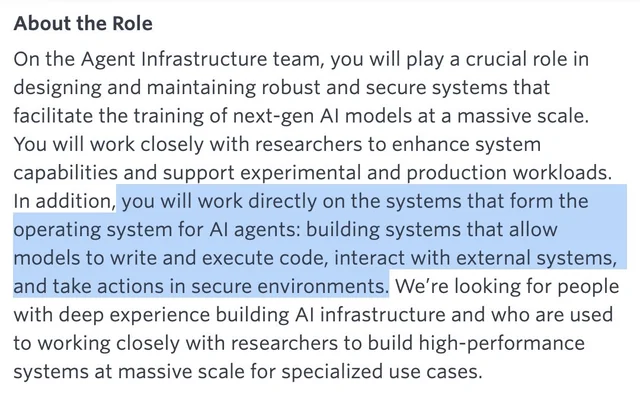
The AI development scene has changed dramatically. In 2026, AI coding agents do much more than suggest code snippets. They can tackle multi-step tasks, understand complex codebases, modify files, run tests, and even investigate errors. This evolution has opened doors for faster application development and the automation of repetitive work across both frontend and backend systems.
The AI app-builder market crossed a critical threshold in 2025, when tools started shipping production-ready code, not just demos. By 2026, the best AI app builders can generate a working business app from a simple prompt. This includes a complete database, tables, pages, and login screens with roles, generating the data model, logic, and access rules, not just the interface.
AI is now deeply integrated into everyday engineering tools. It combines code generation, repository analysis, testing, code review, documentation, and deployment assistance. Specialized agents are also emerging, focusing on frontend implementation, backend development, testing, and infrastructure tasks. This level of specialization means AI can handle more complex parts of the development process.
Worldwide AI spending is forecast to reach $2.52 trillion in 2026, a 44% year-over-year increase. Spending on AI software alone is projected to grow from $283 billion in 2025 to $453 billion in 2026, a jump of roughly 60%. This massive investment signals clear confidence in AI's capabilities and its economic impact.
Real-World Impact: Apps Built by AI Agents
The proof is in the production-ready code. Today's AI app builders generate real, exportable code like React and TypeScript. They aren't locking users into proprietary visual ecosystems. The focus has shifted from "can it generate a screen?" to "does the app run on the data we already keep, and can a client sign in tomorrow without a developer touching it?" This is a crucial distinction.
AI agents can plan tasks, make decisions, use development tools, execute workflows, evaluate results, and refine their work until an objective is achieved with minimal supervision. Consider LaraCopilot, an AI builder for Laravel and PHP, which cuts MVP setup time by 75% compared to manual development (laracopilot.com). General-purpose web app builders like Lovable, Bolt.new, and Rocket.new generate full-stack web apps from a simple conversation. Rocket.new even supports Flutter for native mobile apps and Next.js for web generation from a single project, with over 25 native integrations.
Emergent.sh uses multi-agent orchestration, combining React, Python FastAPI, and MongoDB. Zite generates production-ready internal tools and business apps, offering secure hosting, SOC 2 Type II compliance, authentication, and access controls. These aren't just proofs of concept; they're robust solutions.
Even major tech companies are seeing incredible results. Anthropic's Fable 5, released in June 2026, reportedly completed a 50-million-line Ruby migration in one day. Stripe had estimated this task would take a team over two months manually. This kind of speed and scale is truly transformative. Hostinger AI Builder, for example, reached 1 million users in its first year, with 93-95% of those users being first-time website builders (hostinger.com).
The Developer's New Role: Architect, Not Coder
Gartner calls 2026 the inflection year when enterprises start to spend at their full potential on AI. However, this doesn't mean developers are obsolete. Instead, their role is evolving. Experts emphasize that while AI automates tasks, effective workflows still require clear requirements, appropriate permissions, reliable tests, and human review. The story of AI in web development is about partnership, not replacement.
Developers are moving from focusing on repetitive coding to concentrating on architecture, scalability, performance, and strategic problem-solving. Learning to direct and evaluate AI-generated work will become a valuable skill. A Salesforce study of CIOs in late 2025 found AI adoption skyrocketed by 282%, but many leaders remain hesitant about a full autonomous agent-first strategy due to trust in data being the number one bottleneck.
This hesitation is valid. Despite the benefits, challenges remain. There's ensuring the security, scalability, and production-readiness of AI-generated code. Trust in AI-generated code remains relatively low, with only 29% of developers trusting AI output to be accurate. Many developers still spend time reviewing outputs. The issue of "workslop," which is low-quality, hallucinated AI noise, requires significant auditing.
Gartner predicts that by 2027, 40% of enterprises could demote or decommission autonomous agents due to governance gaps discovered after production incidents. This highlights the critical need for strong AI governance, responsible AI controls, proper permissions, evaluation, risk management, and human oversight. The future is about smarter collaboration, not blind delegation.
Why TashiOS is Your AI-Native Command Center
In this rapidly evolving world of autonomous AI agents, the need for a streamlined, powerful, and developer-centric platform is greater than ever. This is where TashiOS comes in. TashiOS is an AI-powered cloud desktop that runs on your own private VPS, bundling the server, the OS, and monthly AI credits into one flat subscription. It's designed for freelancers, entrepreneurs, agencies, and side-hustlers who want to build client-ready digital products without juggling many separate tools.
The problem TashiOS solves is clear: creating and selling digital services typically means stitching together AI chat, code editors, hosting, website builders, automation tools, email platforms, and client management. TashiOS combines all of that into one cloud workspace. Its built-in AI assistant, Skynet, allows you to describe an app or website in plain English, and Skynet builds it, no coding required. This directly addresses the autonomous AI agent trend by providing a centralized platform where AI does the heavy lifting.
A key differentiator for TashiOS is its focus on creation, selling, and management from one place. Unlike other AI tools that help with just one task, TashiOS offers a comprehensive environment. Plus, everything you build, including apps, code, and customer data, belongs to you and lives on your own server. This provides full data control and eliminates vendor lock-in, a significant concern in an AI-driven world where data privacy and ownership are paramount.
As autonomous AI agents become standard infrastructure, a platform like TashiOS provides the perfect environment to direct and manage these capabilities. Imagine having a single, predictable monthly cost of $49, which includes your private VPS, the cloud desktop, over 25 built-in apps, and $150 in AI credits ($100 starter budget + $50 bonus). You get a 7-day free trial, with $0 charged today, and you can cancel before day 8 for no charge. This makes it incredibly easy to get started and experiment with the power of AI-driven development.
Ready to experience the power of autonomous AI agents in a unified, self-hosted environment? Explore how TashiOS can transform your website and app building workflow, enabling you to create, sell, and manage digital products more efficiently than ever before. It's time to let AI build, so you can earn.
Navigating the Future: Challenges and Opportunities
The rise of autonomous AI agents brings both immense opportunities and new challenges. On the opportunity side, faster development cycles are a given. AI tools significantly reduce the time for repetitive tasks, allowing for faster prototyping and more frequent iterations. This also leads to the democratization of development. AI app builders enable non-developers and small businesses to create sophisticated applications and websites without extensive coding knowledge, addressing barriers like lack of time and technical expertise.
The market data supports this growth. The global AI website builder market is projected to reach $3.24 billion in 2026, up from $2.69 billion in 2025, and is on track to hit $17.43 billion by 2035 (May 2026, Hostinger). Small and medium enterprises (SMEs) drive nearly half (49%) of all revenue in this market, showing they are the core adopter segment. Similarly, the global AI apps market is projected to grow from $5.77 billion in 2026 to $81.68 billion by 2034.
However, challenges persist. Ensuring the security, scalability, and production-readiness of AI-generated code is critical. The "workslop" issue, where AI produces low-quality or hallucinated outputs, requires careful auditing. As autonomy increases, stronger AI governance and responsible AI controls around permissions, evaluation, risk, and human oversight are becoming crucial. Gartner predicts that over 40% of agentic AI projects could be canceled by the end of 2027 due to rising costs, unclear business value, or weak risk controls.
Looking ahead, autonomous agents will become standard infrastructure across the full web development stack. They will move beyond copilots to systems that can take a goal, plan steps, call tools and APIs, and complete multi-step work with human review. The future will see more AI-native platforms, designed around seamless collaboration between developers and AI agents, rather than AI being an add-on feature.
By 2027, the majority (60%) of UI implementation code, including state management, data fetching, routing, and tests, will be AI-generated, though 100% will still be human-reviewed. Design systems will become essential infrastructure, serving as the primary way humans communicate architectural intent to AI by 2027. This evolution means developers will become more like architects, guiding powerful AI teams to build complex systems.
The Road Ahead: AI as Your Business Partner
The shift to autonomous AI agents in website and app building is not just a technological advancement; it's a fundamental change in how digital products are created and managed. This era promises increased productivity, with AI adoption expected to boost productivity by up to 40% in some sectors. For businesses, the success of AI projects will depend on tying AI to clear business outcomes, preparing data, governing it well, and keeping people in control of critical decisions.
The future of web development isn't just about AI writing code faster. It's about AI becoming a comprehensive partner in the entire development lifecycle, freeing up human creativity for higher-level strategic work. Platforms like TashiOS are at the forefront of this revolution, providing the tools and infrastructure to embrace this autonomous future confidently.
Don't be left behind in the autonomous AI revolution. Take control of your development workflow, own your data, and leverage the power of AI to build, sell, and manage digital products with unprecedented efficiency. Visit tashios.com/pricing to start your 7-day free trial today and experience how AI truly builds, and you earn.