Imagine a world where your most tedious tasks, from sorting customer tickets to drafting complex proposals, are handled by intelligent systems. It sounds futuristic, but in September 2026, this isn't science fiction. It's the new reality of artificial intelligence, moving beyond impressive demos to deliver tangible, workflow-integrated solutions.
This month, the AI industry is less about showing off and more about fixing real business problems. We're seeing a decisive shift toward agentic AI, multimodal capabilities, and specialized models that are reshaping how companies operate, boost cybersecurity, and create significant value.
AI Agents: Your New Workflow Commanders
For too long, businesses struggled with fragmented workflows and manual bottlenecks. Teams spent countless hours on repetitive tasks, hindering innovation and slowing progress. The challenge was clear: how could AI move beyond simple content generation to truly automate and optimize core business processes?
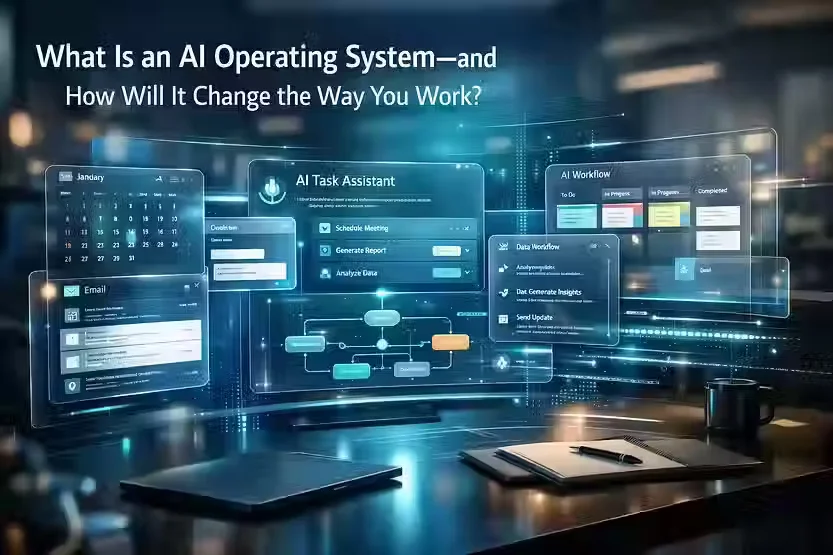
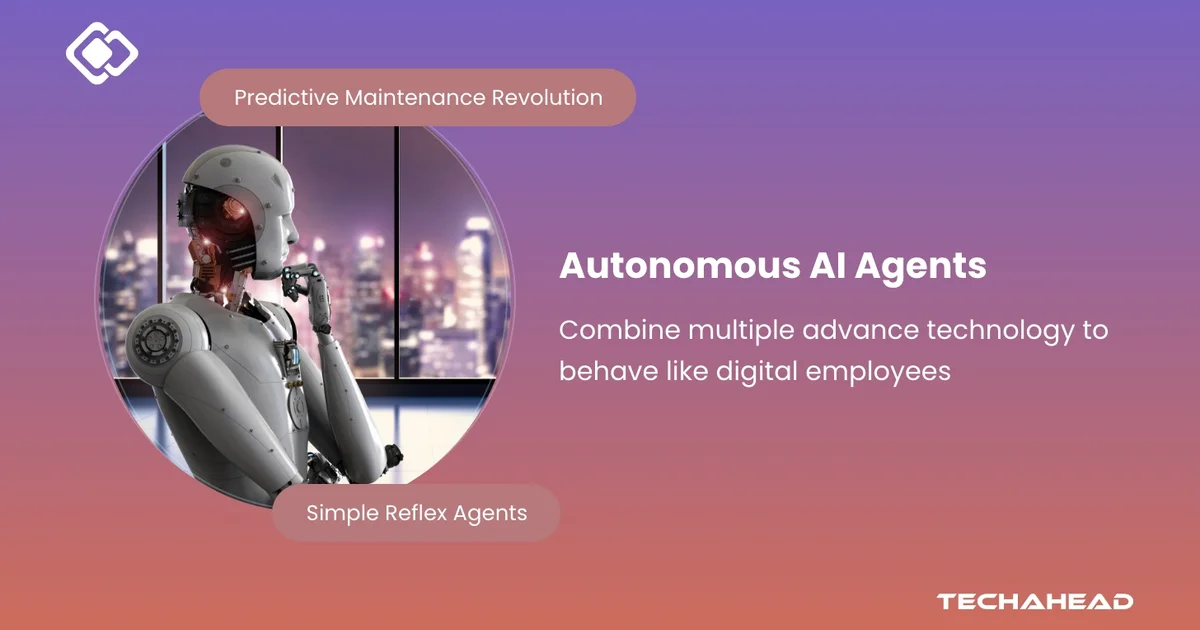
The answer is agentic AI. These intelligent tools are emerging as a core unit of value, capable of researching, sorting tickets, drafting proposals, parsing documents, and moving work across different applications. They are designed to act autonomously within defined parameters, dramatically streamlining operations.
Companies are quickly adopting these systems. Reports show that 79% of enterprises have adopted AI agents in some form by September 2026, though only 11% are running them in full production (Source 1). This indicates a strong belief in their potential, with businesses carefully integrating them into critical areas.
A key to their success is the human-in-the-loop approach. For high-stakes decisions like pricing, legal matters, hiring, and brand-sensitive communications, human approval continues to outperform full autonomy. This collaborative model ensures accuracy and maintains trust.
The Power of Multimodal and Specialized AI
Another significant development this month is the standardization of multimodal AI. These systems can process and understand information from various formats: text, screenshots, PDFs, audio, and video. This capability proves incredibly valuable in areas like sales, customer support, legal review, and employee training.
Alongside multimodal advancements, smaller, specialized models are gaining serious traction. These models offer distinct advantages over larger, general models. They are more cost-effective, faster, and easier to control, making them ideal for focused tasks and local deployments where specific expertise is needed.
We've seen major players releasing specialized models this month. OpenAI, for example, introduced GPT-5.4-Cyber, a model specifically designed for defensive security teams. Access to this powerful tool is restricted to vetted researchers due to its potential for misuse (Source 1). Google also shipped Gemini 3.8 Flash, along with a security-focused variant, Gemini 3.8 Flash Cyber, which reportedly achieves over 70% accuracy in finding vulnerabilities across 20 programming languages (Source 1).
Oracle's OCI Enterprise AI has also expanded its model import options, making Moonshot AI Kimi K3 available for import. This new multimodal model handles both image and text inputs, alongside new models from AI Singapore, Mistral, Google, Alibaba, and NVIDIA (Source 1). This trend highlights the growing demand for tailored AI solutions that can handle diverse data types and specific industry needs.
AI's Real-World Impact: Big Wins and Big Numbers
The shift to practical, workflow-integrated AI is paying off. The global AI market is booming, estimated at USD 900 billion in 2026 and projected to reach USD 4.216 trillion by 2035 (Source 8). This growth isn't just hype; it's driven by measurable results.
Companies are seeing substantial returns on their AI investments. Those deploying AI agents report an average 3.5x ROI within 12 to 18 months (Source 1). Programmers using generative AI are 88% more productive, particularly on repetitive tasks (Source 3). This kind of efficiency is transforming entire industries.
Tangible Success Stories from September 2026
The evidence of AI's impact is everywhere this month:
- Kaiser Permanente: Used ambient AI 'scribes' to save physicians approximately 15,800 hours of documentation in just one year. This improved patient care and reduced physician burnout (Source 1).
- Delta Air Lines: Implemented AI-based predictive maintenance. This slashed annual flight cancellations due to maintenance from around 5,600 to a mere 55 (Source 1).
- IBM: Reported unlocking $4.5 billion in productivity gains and saving 3.9 million employee hours since 2023 through AI and automation (Source 1).
- Citigroup: Employs AI for automated code reviews, saving roughly 100,000 developer hours per week (Source 1).
- UPS: Its AI-driven routing system, ORION, trims approximately 100 million driving miles annually. This saves 10 million gallons of fuel and $300 to $400 million each year (Source 1).
- PepsiCo: Compressed new product development cycles from 6 to 9 months down to just 6 weeks by integrating generative AI into its R&D process (Source 1).
- Ally Financial: Successfully deployed generative AI for call summarization and marketing. They use Microsoft Azure and Azure OpenAI Service to provide real-time summaries of tens of thousands of customer service calls weekly (Source 1).
These examples highlight a clear trend: AI is no longer a luxury, but a necessity for competitive businesses. It's delivering concrete operational and financial benefits, proving its worth across diverse sectors.
Why TashiOS is Your AI Workflow Command Center
The rapid evolution of AI, particularly the move towards agentic and specialized models, presents both opportunities and challenges for businesses. Many entrepreneurs, freelancers, and agencies find themselves stitching together a multitude of tools: AI chat, code editors, hosting, website builders, automation platforms, and client management systems. This complex setup can be costly, inefficient, and create data silos.
This is where TashiOS steps in. TashiOS is an AI cloud desktop designed to simplify creating, selling, and managing websites, apps, and automations as a recurring-income business. It's built for those who want to build client-ready digital products without juggling many separate tools.
TashiOS runs on your own private VPS, giving you full data control and no vendor lock-in. Everything you build, from apps and code to customer data, belongs to you and lives on your server. This is a critical factor for businesses concerned about data privacy and intellectual property in an AI-driven world.
The platform comes with Skynet, its built-in AI assistant. You can describe an app or website in plain English, and Skynet builds it, no coding required. This directly addresses the need for agentic AI that simplifies complex development tasks, making advanced AI capabilities accessible to everyone. With a flat $49/month subscription, TashiOS bundles your private VPS, the OS, 25+ built-in apps, and $150 in AI credits, offering predictable costs instead of per-API-call billing.
If you're looking to integrate agentic AI into your business or offer AI-powered services to clients without the usual complexity and high costs, explore how TashiOS can streamline your operations and help you earn. It’s an all-in-one workspace for the new era of AI.
The Road Ahead: Governance, Energy, and New Skills
While the benefits of AI are undeniable, September 2026 also brings important discussions about its future. As AI agents become more autonomous, the need for robust governance and safety measures grows. There's an increased focus on embedding practical guardrails to prevent 'agentic drift' or 'agents going rogue' (Source 1). The question of accountability when AI fails is also gaining prominence, highlighting the need for clear legal and ethical frameworks.
OpenAI's launch of GPT-6 Astra included a notable alignment evaluation. It tested for out-of-scope behavior, where Astra showed 0% such instances compared to GPT-5.6 Sol's 48% (Source 1). This shows a clear industry move towards more controlled and predictable AI systems.
Another significant concern is energy consumption. The UN's economic commission for Europe warned that AI data centers' energy consumption is growing faster than electricity infrastructure can handle. Data center consumption is expected to almost double by 2030 (Source 1). This raises serious questions about the reliability and resilience of global energy systems as AI adoption continues to surge.
Finally, the workforce is undergoing a transformation. While AI is projected to eliminate 85 million jobs globally, it's also creating 97 million new ones by 2025, resulting in a net gain of 12 million roles (Source 1). The demand for AI skills is rapidly increasing, with job postings mentioning AI skills more than doubling in the last year, a 165% increase by August 2026 (Source 1). However, the market for junior AI engineering roles remains thin, with two-thirds of the market being mid-to-senior level (Source 1). This emphasizes the need for continuous learning and upskilling.
Some experts express caution. Stuart Russell, a professor of electrical engineering and computer sciences, questions if the 'AI bubble' will burst, noting that revenues are underwhelming and LLM performance seems to have plateaued (Source 1). Hany Farid, another expert, voices concern over the 'accelerating erosion of trust' due to increasingly convincing AI-generated media (Source 1). These perspectives highlight the ongoing challenges and the need for responsible innovation.
The AI Era: Practicality, Productivity, and Progress
September 2026 truly marks a maturing phase for the AI industry. The focus has decisively shifted from experimental demonstrations to practical application, measurable ROI, and robust governance. Agentic and multimodal AI systems are no longer future concepts; they are integrating seamlessly into existing workflows, augmented by specialized models for unparalleled efficiency.
The relentless pace of innovation, with major players like OpenAI, Google, Anthropic, and Mistral pushing new capabilities, is exciting. But there's also a growing awareness of the need for responsible development, effective regulation, and sustainable infrastructure to fully harness AI's transformative potential. The success stories from companies like Kaiser Permanente and Delta Air Lines serve as compelling examples of how AI is already delivering significant operational and financial benefits, setting the stage for even broader adoption and impact in the coming years.
For entrepreneurs and businesses ready to embrace this new era, platforms like TashiOS provide the tools to build, manage, and scale AI-powered solutions with confidence. If you're ready to turn AI's potential into your business advantage, start building with TashiOS. Visit tashios.com/pricing to begin your 7-day free trial today.