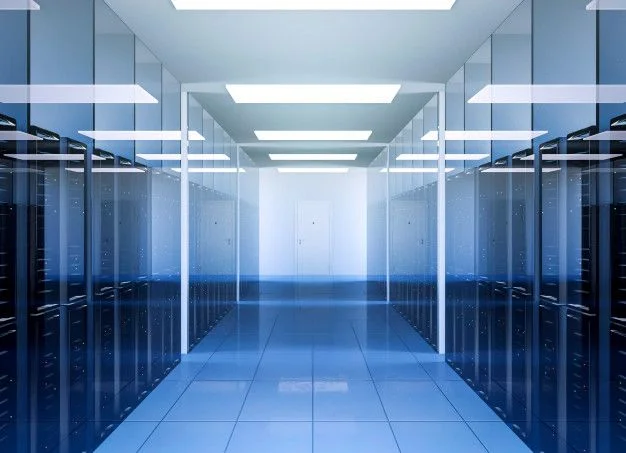
In July 2026, a quiet revolution is taking hold in how businesses manage their vital technology. For years, the mantra was 'cloud-first,' pushing everything into public cloud services. But today, a striking 83% of enterprises have already moved or plan to move workloads *off* the public cloud, according to a 2024 Barclays survey. This isn't a rejection of the cloud entirely, but a smart pivot towards a more balanced approach, often called 'self-hosting' or 'on-premise,' especially for specialized needs.
This shift is driven by powerful forces: new data privacy rules, the rising expense of public cloud services, and the huge demand for powerful AI computing. Businesses are realizing that while the cloud offers flexibility, keeping some operations on their own servers provides unmatched control, predictable costs, and tailored performance. Let's explore the latest developments shaping this exciting trend.
The New Reality: Why Businesses Are Rethinking Cloud-First
The tech world in 2025-2026 isn't about choosing one path, but finding the right place for each task. It's a 'workload-appropriate placement' strategy, not a one-size-fits-all cloud mandate.
Hybrid Cloud Dominance: It's no longer a niche idea. By 2024, 87% of large companies were already using a hybrid cloud setup, mixing their own servers with public cloud services. This trend is only getting stronger, with the private cloud part of hybrid systems expected to make up 79.1% of the global private cloud market by 2026, as per Coherent Market Insights.
Cloud Repatriation on the Rise: Many businesses are actively bringing their digital operations back from the public cloud to their own private servers or data centers. This move, called 'cloud repatriation,' is often sparked by concerns over unexpected costs, difficulties meeting compliance rules, and a desire for better, more consistent performance.
Data Center Spending Boom: The infrastructure supporting these servers is seeing massive investment. Global spending on data centers is projected to reach nearly $7 trillion between 2025 and 2030. A large chunk, 60%, will go into technology and hardware. In the US alone, companies spent over $25 billion on 20 data center construction projects in January 2026, a huge jump from $2.9 billion in 2024, according to Databank. This shows a clear commitment to building out private infrastructure.
AI's Hungry Appetite: Driving Server Demand Like Never Before
Artificial intelligence is perhaps the biggest force reshaping server demand. AI workloads need immense computing power, and businesses are investing heavily in specialized hardware to handle them.
Explosive AI Server Growth: Companies like Dell are seeing phenomenal growth in AI server sales. Dell's AI server revenue jumped from $1.5 billion in fiscal year 2024 to $9.7 billion in FY2025, and then to a staggering $24.6 billion in FY2026. Projections for FY2027 are even higher, at $50 billion. This shows just how crucial dedicated AI infrastructure has become.
Power Demands Soar: AI-optimized servers are incredibly powerful, and they need a lot of electricity. These servers are expected to use 31% of all data center power in 2026 and could even use more power than traditional data centers by 2027. This shift in power consumption highlights the unique demands of AI processing, which often favors dedicated, on-premise solutions for efficiency and control.
More Control, More Security, More Savings: The Self-Hosting Advantage
Beyond the raw power of AI, businesses are finding compelling reasons to run their operations on their own servers. It often comes down to fundamental needs: control, compliance, and cost.
Simplified Compliance and Control: For businesses in highly regulated sectors like healthcare, finance, or government contracting, having full control over data is non-negotiable. Self-hosting simplifies compliance with major regulations. For example, the EU's Digital Operational Resilience Act (DORA), enforceable since January 2025, and the upcoming AI Act, fully enforceable by August 2026, both emphasize data sovereignty and robust operational resilience. Keeping data on your own servers makes it much easier to meet these strict rules, reducing legal and financial risks.
Predictable Costs and Long-Term Savings: While public cloud services offer flexibility, their pay-as-you-go models can lead to unpredictable and escalating bills, especially for high-volume operations. Running a business on your own server, or a Virtual Private Server (VPS), offers more predictable costs. For AI workloads, self-hosting often becomes cheaper at high volumes, with the cost-effectiveness crossover point typically between 100,000 and 300,000 monthly requests.
Enhanced Performance and Lower Latency: Imagine working with massive video files. On-premise servers offer lightning-fast local network speeds, often 1 Gigabit per second or more, compared to slower internet uploads and downloads. For AI applications that need real-time responses, local processing eliminates network delays, ensuring consistent and rapid results.
Stronger Security and Data Sovereignty: Cybersecurity experts are increasingly concerned about the 'SaaS Trust Problem.' In 2025, breaches in Software-as-a-Service (SaaS) became more systematic, with attackers targeting trusted integrations. Self-hosting lets you keep your data behind your own firewalls, reducing reliance on third-party security practices and avoiding the risks of multi-tenant cloud environments where your data shares space with others. Cybersecurity professional Brian Olson noted in February 2026, "if you care about your data, your privacy, and your long-term autonomy, it's time to seriously consider self-hosting."
TashiOS: Your AI Business on Your Own Terms
This growing need for control, performance, and cost predictability in an AI-driven world is exactly where solutions like TashiOS shine. TashiOS is an AI-powered cloud desktop designed for freelancers, entrepreneurs, and agencies who want to build, sell, and manage websites, apps, and automations as a recurring-income business.
It's an AI cloud desktop that runs on your *own* private VPS, giving you full data control and ownership over everything you build. This means your prompts and data stay on your server, not scattered across various cloud AI APIs with per-call billing. Instead, TashiOS offers a predictable flat monthly cost of $49, which includes your private VPS, the cloud desktop, over 25 built-in apps, and $150 in AI credits.
With TashiOS, you can use Skynet, its built-in AI assistant, to describe an app or website in plain English, and it builds it for you, no coding required. This combines AI chat, code editors, hosting, website builders, and client management into one workspace, solving the problem of juggling many separate tools. It's a powerful way to run your business with AI, on your terms, with your data secure.
The Hardware Powering Tomorrow: What's New in 2026
The server hardware market is rapidly evolving to meet the demands of AI and hybrid cloud strategies. New generations of servers are more powerful and efficient than ever.
Dell's AI Beasts: Dell Technologies is a leader in this space. Their 17th Generation (17G) PowerEdge servers, like the PowerEdge R770/R670 and R7725/R6725, are designed for the latest Intel Xeon 6 and AMD EPYC "Turin" processors. The PowerEdge XE9680 stands out as an "AI Beast," capable of housing 8 NVIDIA H100 or B200 (Blackwell) GPUs. Dell was even named the 2025 IT Brand Pulse Market and Innovation Leader for Servers for AI, underscoring their commitment to AI-optimized solutions. Dell's AI server revenue reached $24.6 billion in FY2026.
HPE's Performance Powerhouses: Hewlett Packard Enterprise (HPE) also expanded its ProLiant Compute Gen12 server portfolio in June 2025. These new servers, powered by 5th Gen AMD EPYC processors, are ideal for virtualization and edge computing. The HPE ProLiant DL series, for example, offers 41% better performance per watt, making it more energy efficient. Global data center spending hit $350 billion in 2026, with businesses prioritizing sustainable HPE ProLiant enterprise servers.
The Rise of Liquid Cooling: As processors become more powerful, they generate more heat. Both Dell and HPE are integrating direct liquid cooling (DLC) into their newest servers. This technology efficiently manages the high power requirements of modern CPUs, which can exceed 350 watts per socket, improving energy efficiency and server stability.
Making the Switch: Practical Steps and What to Expect
Deciding to run a business on your own server isn't an all-or-nothing choice. It's a strategic decision that depends on your business stage, growth, and internal expertise.
- Understand Your Needs: Early startups might prefer fully managed services for simplicity. Larger enterprises with strong tech teams might find self-hosting more cost-effective and controllable in the long run.
- Consider the Costs: Initial setup for self-hosting can be higher, roughly 5.25 times more than a typical SaaS plan. However, once your infrastructure is in place, the cost of adding more data or workloads becomes almost zero. This leads to significant long-term savings for high-volume operations.
- Assess Your Skills: Self-hosting requires internal expertise for updates, backups, security, and troubleshooting. A realistic budget for a small self-hosted AI deployment might include 1-2 full-time engineers. However, tools like TashiOS can simplify many of these tasks, helping you manage fine-tuning and deployment while keeping your data on your VPS.
- Embrace Hybrid: The future isn't just cloud or just on-premise; it's a smart mix. Combining hyperscale cloud for flexible, burstable needs with colocation and on-premise infrastructure for core, sensitive, or high-performance workloads is becoming the standard. This allows businesses to place each workload where it makes the most sense for cost, performance, and compliance.
- Focus on Cybersecurity: With increased control comes increased responsibility. Self-hosted environments need robust security practices. This includes regular patching, adhering to the 3-2-1 backup rule (three copies, two different media, one offsite), continuous monitoring with tools like Uptime Kuma, and strict access control. The average cost of a breach for mid-sized companies is $4.4 million, so security can't be an afterthought.
- Edge Computing is Growing: The rise of IoT and 5G is pushing computing closer to where data is generated, at the 'edge' of the network. Gartner predicted that 75% of enterprise data would be created and processed at the edge by 2025. This trend favors localized server deployments for ultra-low-latency applications, making self-hosted or strategically placed servers even more relevant.
If you're looking to take control of your digital business, reduce unpredictable cloud costs, and ensure your data sovereignty in an AI-driven world, self-hosting offers a powerful path forward. It's about building a resilient, cost-effective, and secure foundation for your future.
Ready to explore how an AI cloud desktop can help you build and manage your digital business on your own server? TashiOS provides everything you need in one place, from AI agents that build apps for you to a secure environment where you own all your data.
The landscape for running a business on your own server in July 2026 is dynamic and full of opportunity. With new hardware, evolving regulations, and the incredible demands of AI, strategic self-hosting is no longer just an option; for many businesses, it's becoming a necessity. It offers a powerful blend of control, security, and long-term cost predictability that the public cloud often struggles to match. By carefully considering your needs and leveraging innovative platforms like TashiOS, you can build a resilient and profitable digital future.
Don't let the complexity of traditional self-hosting hold you back. Discover how TashiOS simplifies the process, giving you an AI-powered cloud desktop on your own VPS with a flat $49/month fee, including AI credits and all the tools you need. Start building your recurring-income business today. Explore pricing and features at tashios.com/pricing.