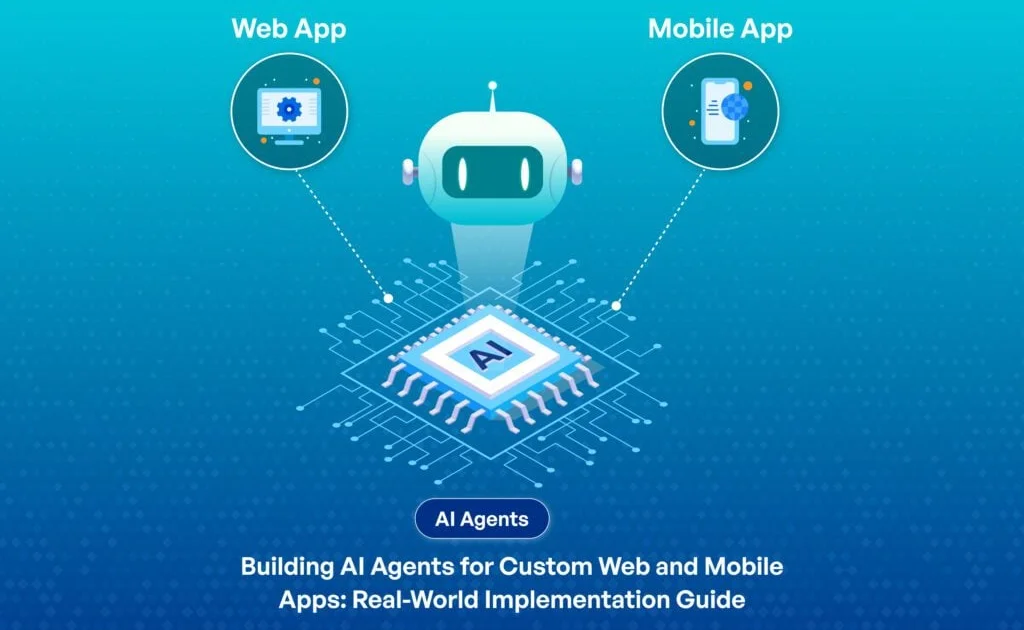
Imagine building a fully functional website or a complex mobile app by simply describing your idea in plain English. This isn't a futuristic dream, it's the reality of July 2026, where an astonishing 67.39% of business owners now prefer AI website builders over traditional development from scratch. This dramatic shift signals a new era in digital creation, one where artificial intelligence isn't just a helper, but the core engine of development.
The AI website and app builder market has evolved at an incredible pace, transforming from niche tools into sophisticated platforms. By 2026, this market isn't just growing; it's experiencing an explosion. This deep dive will explore the latest developments, surprising statistics, and real-world examples that define this exciting new frontier of AI-powered digital product creation.
The Exploding Market of AI-Powered Development
The numbers tell a clear story: the AI website and app builder market is in hyper-growth mode. In 2025, the global AI website builder market was valued at $2.69 billion. By 2026, it surged to $3.24 billion, a remarkable 20% increase in just one year. Projections show it reaching $17.43 billion by 2035, growing at a Compound Annual Growth Rate (CAGR) of 20.55% from 2026 to 2035, as reported by Precedence Research (4).
The no-code AI platform market, which includes many app builders, shows even more explosive potential. Valued at $6.56 billion in 2025, it's expected to hit $75.14 billion by 2034, a staggering 31.13% CAGR. This growth isn't just about new tools; it's about a fundamental change in how digital products are built.
A key development in 2026 is the move towards "AI-augmented system architecture." Here, AI isn't an optional extra; it's a basic requirement for scalable digital products. This includes the rise of "agentic code synthesis" and "low-latency cloud frameworks." Mobile applications now process billions of operations directly on devices, reacting to real-time user behavior, creating dynamic interfaces, and completing multi-step tasks on their own.
Adoption rates highlight this transformation:
- 67.39% of business owners now prefer AI website builders over traditional development (1).
- 58% of small businesses use generative AI, a significant jump from 23% in 2023.
- 90% of developers regularly use at least one AI tool at work as of January 2026, up from 85% in mid-2025.
- By 2026, 70% of new enterprise applications are expected to rely on low-code or no-code tools, a sharp rise from under 25% in 2020.
- Approximately 46% of new code is AI-generated as of 2026, up from roughly 10% in 2023.
From Idea to App: Unprecedented Speed and Accessibility
The most striking benefit of AI website and app builders is their speed. Traditional web design can take weeks or months and cost thousands of dollars. AI tools can generate a complete website in minutes. Some platforms, like Durable, even claim 30-second site generation, drastically cutting down the time it takes for businesses to launch (1).
Cost savings are equally compelling. While traditional development can be expensive, AI tools can build a site for less than $100 per month. This affordability, combined with rapid deployment, makes AI builders a fundamental infrastructure for small and medium enterprises (SMEs), which drive nearly 49% of AI website builder revenue (7).
AI builders also make web and app development accessible to everyone. You don't need a computer science degree to create a digital product anymore. In fact, 63% of AI app builder users have no coding background. Experts agree that AI has changed web design from static pages into dynamic, personalized digital experiences. AI is now a "functional work partner" that improves work quality for developers and designers, letting them focus on creative, human-centric processes by handling repetitive tasks (6).
The "vibe coding" movement, where software is built by describing intent rather than writing implementation, is quickly gaining traction. Tools like Replit, Bolt, and Lovable are transforming 8-week development cycles into 2-day sprints. This shift empowers individuals and businesses to bring their ideas to life faster and more affordably than ever before.
Leading the Charge: Key AI Website and App Builders in 2026
The market is rich with innovative platforms, each pushing the boundaries of what AI can do for development:
- Durable AI: Positioned as an "all-in-one AI business builder," Durable generates websites in about 30 seconds. Its March 2026 relaunch expanded its offerings beyond a simple site generator to include a lightweight CRM, invoicing, an AI content writer, and marketing helpers (1).
- Hostinger Horizons: This platform has reached over one million users, with 93-95% being first-time website builders, showing the broad appeal of AI-powered tools (2).
- Lovable: Frequently cited as a top AI app builder in 2026, Lovable generates full-stack applications, including frontend, backend, authentication, and database, from natural language prompts. It was reportedly in talks to raise funding at a $13.2 billion valuation in July 2026 (1, 8).
- Bolt.new: Known for rapid prototyping, Bolt.new generates full-stack web apps from a single prompt, producing real code in frameworks like React and Next.js (1).
- Anything: Ranked #1 in an expert review in July 2026, Anything turns plain-English descriptions into "real, shippable web apps, mobile apps, internal tools, and AI-native products." It supports leading frontier models like GPT-5, Claude Sonnet 4.6, and Gemini 2.5, and offers full-stack infrastructure including a Postgres database, Stripe payments, authentication, and one-click App Store submission (1, 5).
- Cursor: An AI-native code editor, Cursor saw immense growth, hitting $2 billion in annualized revenue by February 2026. Its maker, Anysphere, was acquired by SpaceX for $60 billion in June 2026, marking a record acquisition for a venture-backed startup (1).
- v0 by Vercel: This tool excels at generating polished UI components and clean React code from text prompts or screenshots, particularly for Next.js, Tailwind CSS, and shadcn/ui.
- Bubble: It remains a leading no-code platform for complex web applications, offering extensive design flexibility and a vast ecosystem of templates and plugins.
- FlutterFlow: A popular choice for cross-platform mobile apps, FlutterFlow provides native mobile app development with full Flutter code export.
- Mendix: This low-code platform uses AI tools for app building, offering features like built-in AI assistant bots, automated testing, and integration with other software.
Beyond Websites: The Rise of Agentic AI and Mobile Prowess
The advancements in AI builders extend far beyond simple websites. Mobile applications are now at the forefront of AI integration. They process billions of operations natively on devices, responding to real-time behavioral signals, generating dynamic interfaces, and executing multi-step workflows autonomously. Reports in July 2026 emphasize that AI integration is no longer optional in mobile app development; it's a baseline requirement for building scalable digital products (1).
Looking ahead, the future points to "agentic loops replacing one-shot prompts." This means AI agents will move beyond single instructions to plan, implement, test, and iterate across multiple files, requiring developers to review and approve at critical stages. This evolution promises even more sophisticated and autonomous development processes.
Another exciting prediction is the move towards multi-modal input. Soon, voice commands, sketches, and even screenshots will join text prompts as first-class inputs for AI builders. Imagine sketching an app interface on a tablet, speaking its functionality, and having an AI agent generate the full-stack code. This level of intuitive creation will further democratize development, making it accessible to an even wider audience.
Why TashiOS is Your Command Center for the AI-First Future
In this rapidly evolving landscape of AI-powered development, having the right tools makes all the difference. This is where TashiOS steps in. TashiOS is an AI-powered cloud desktop designed for creating, selling, and managing websites, apps, and automations as a recurring-income business. It's built for freelancers, entrepreneurs, agencies, and side-hustlers who want to build client-ready digital products without juggling many separate tools.
The problem TashiOS solves is clear: creating and selling digital services typically means stitching together AI chat, code editors, hosting, website builders, automation tools, email platforms, and client management. TashiOS combines all of that into one cloud workspace, complete with AI agents that help you build, deploy, manage, and resell digital products. Its built-in AI assistant, Skynet, lets you describe an app or website in plain English, and Skynet builds it for you, no coding required.
A key differentiator for TashiOS is ownership and control. Everything you build, including apps, code, and customer data, belongs to you and lives on your own private VPS. This gives you full data control and avoids vendor lock-in. Plus, TashiOS offers predictable pricing: a flat $49 per month includes your private VPS, the cloud desktop, over 25 built-in apps, and $150 in AI credits ($100 starter budget + $50 bonus). You also get a 7-day free trial with no charge today, allowing you to cancel before day 8 without any cost.
Ready to harness this new wave of AI development without the usual complexity? Visit TashiOS today to see how you can start building, selling, and managing digital products with ease.
Navigating the New Frontier: Practical Implications and Future Outlook
The practical implications of AI builders are profound. They are empowering a new wave of "citizen developers" – individuals outside formal IT departments – to create applications. By 2026, 80% of low-code users will come from outside IT. The sheer speed of AI generation allows for rapid prototyping and faster validation of business ideas, meaning quicker market entry and iteration.
Developer and designer roles are also shifting significantly. AI handles boilerplate code, repetitive tasks, and even suggests design elements. This frees human designers and developers to focus on higher-level creative problem-solving, architectural decisions, and complex logic. AI-driven personalization is now a requirement for mobile apps, tailoring content, recommendations, and notifications based on real-time user behavior.
However, challenges remain. While AI excels at initial generation, complex projects still face hurdles with persistent databases, robust authentication, and maintaining coherence as requirements evolve. This highlights the "generation outrunning operation" problem: apps are generated faster, but managing and operating them at scale remains an open problem (1).
Looking ahead, several predictions shape the future:
- AI as Default: AI integration will become the default approach across industries for new application development.
- Agentic AI: As mentioned, agentic loops will replace one-shot prompts, with AI agents planning, implementing, testing, and iterating across files.
- Multi-Modal Input: Voice, sketch, and even screenshots will become standard inputs for AI builders.
- Consolidation and Specialization: The market will likely see consolidation, with tools specializing in specific use cases, such as frontend generators, internal tool builders, or full-stack business systems.
- Increased Trust in AI Output (with caveats): While developer trust in raw AI generation fell from 77% in 2023 to 60% in 2025, tools that provide structured planning and persistent project context are improving reliability. Human supervision and careful review of AI-generated code remain crucial for production-ready applications (1).
The world of AI website and app builders is not just evolving; it's undergoing a complete metamorphosis. From market growth to agentic code synthesis, the developments in July 2026 paint a picture of a future where digital creation is faster, more accessible, and profoundly more intelligent. This isn't just about building tools; it's about empowering a new generation of creators and businesses to realize their digital ambitions with unprecedented speed and efficiency.
If you're ready to embrace this future and turn your ideas into income, explore how TashiOS can empower your journey. Visit TashiOS pricing to get started with your own AI cloud desktop and transform how you build and sell.